
Why do cats have slit pupils?
The short answer
Cats have slit pupils because they hunt in low light and ambush prey from close to the ground. The slit lets their pupils open far wider than round pupils to catch dim light, and it adds a blur effect that helps them judge distance.
The long answer
Look into the eyes of a cat and you'll see vertically-slit pupils staring back at you, unamused that you haven't handed over a treat yet.
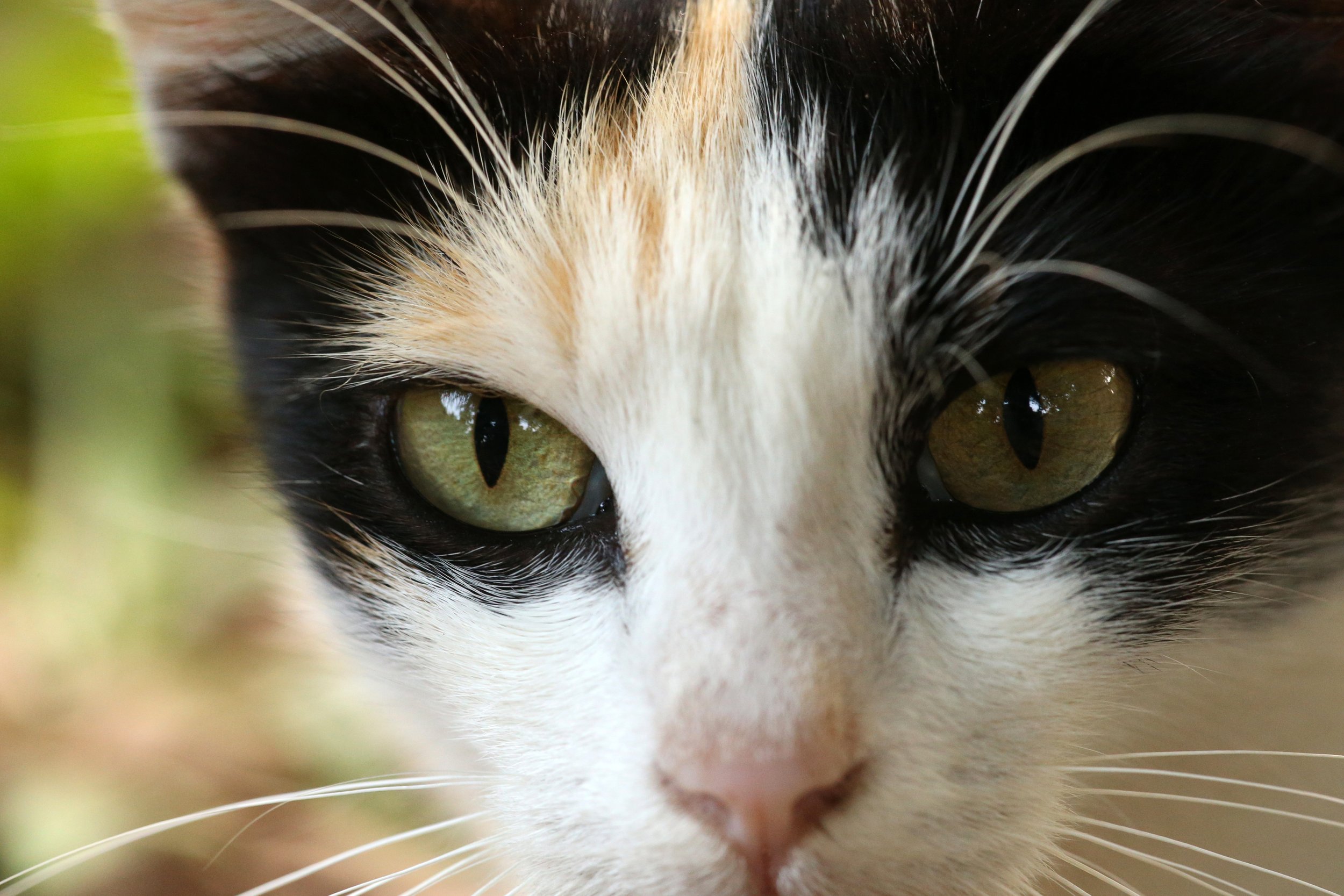
"Cat-eyes" by Devilal is licensed under CC BY-SA 3.0.
Whether they are purrtically vertically slit or not, the purpose of pupils is to let light enter the eye. The light travels to the retina, a light-sensitive tissue at the back of the eyeball, where it's converted into electrical signals that get sent to the brain via the optic nerve, allowing sight.
But why do cats have slit pupils instead of round ones like humans?
Reason #1: Cats are twilight hunters that need enhanced low-light vision.
Pupils respond to changes in brightness, getting smaller when it's light out and bigger when it's dark. Cat pupils are especially flexible in this regard: A cat's pupils can expand to 135 times the size of their minimum pupil area, whereas human pupils can only expand 15x.

Top: A cat's pupils dilated to see in the dark. Bottom: A cat's pupils undilated to see in the light. (Different kitties).
Top: "Black cat in the dark" by Snapdragon66 is licensed under CC BY-SA 4.0. Bottom: "Look into my eyes....." by Paul Lucas is licensed under CC BY 2.0.
Cats require precise pupil control because they hunt in low light, mostly around dawn, dusk, and night. They need to be able to see prey hiding in dim environments, so their pupils expand to let in as much light as possible. Cat eyes also have 6-8x more rod cells (responsible for low-light vision) and larger corneas that help with their night vision.

A visual comparison of what a human can see at night (top) vs. what a cat can see (bottom).
Source: Nickolay Lamm
Cats' dilated night-vision eyes would be overwhelmed in bright daylight, so constricting pupils to a narrow slit opening helps them protect their retinas and maintain stellar sight.
Reason #2: Cats are ambush predators that need enhanced depth perception.
Cats are sneaky by design. They are ambush predators that need to precisely judge distance before they pounce on their prey. Vertically-slit pupils help with better depth perception.

Illustration of the blur effect that a vertical-slit pupil creates. The mouse is in focus, but horizontal lines like the log and the ground smear, while upright stalks of straw stay sharper.
"Four-striped Grass Mouse" (modified) by Kandukuru Nagarjun is licensed under CC BY 4.0.
With our own round pupils, anything that we're not looking at appears blurry, spread evenly in every direction. But cats and other ambush predators with vertical pupils have a different blur. The distances beyond and in front of what cats look at are horizontally blurry, creating a better sense of how far away the target is.
This blur effect makes it easier for a cat to judge how far away its prey is without moving its head, which could give away its position. The fuzzier a patch of ground looks, the farther away it is from the prey in focus.
Vertically-slit pupils are common in other low-to-the-ground ambush predators, like snakes, crocodiles, and geckos. In fact, in one study of ambush predators with forward-facing eyes, 82% of those with vertical pupils stood less than 42cm (~16.5 in.) tall. Quite petite predators.
🧠 Bonus brain points
Do big cats have slit pupils?
No, unlike house cats, big cats like lions and tigers have round pupils.
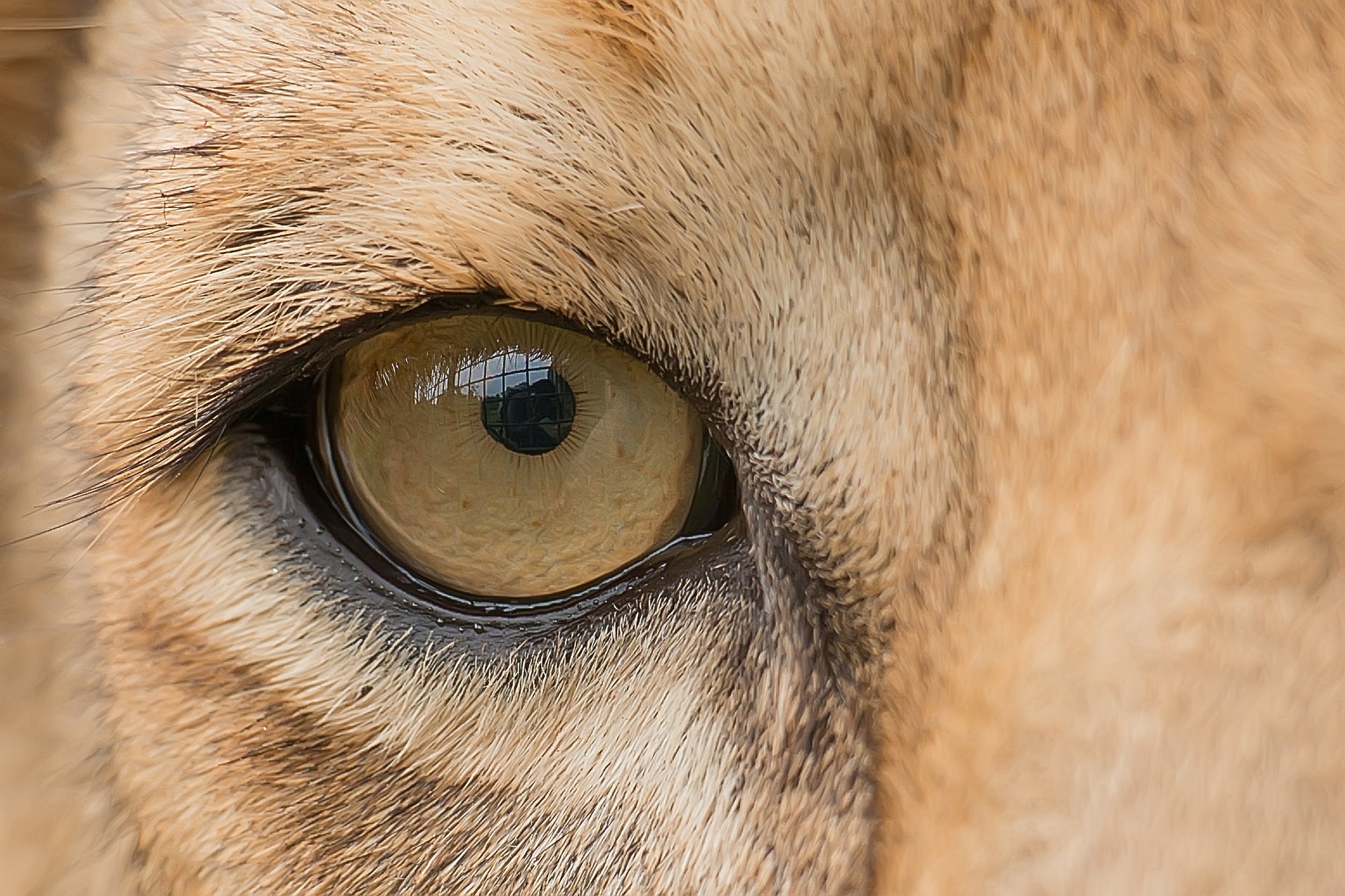
"The Lion's Eye" by Azim Khan Ronnie is licensed under CC BY-SA 4.0.
These big cats stand taller than domestic cats, so the blurring effect of vertical pupils would help them less when judging distance to prey. And while big cats also use ambush tactics, they rely more on their size and strength to take down larger prey after a short sprint. In other words, they don't need the depth perception boost that their house cat relatives do.
Curious about how the world works?
Today You Should Know is a free, weekly email newsletter designed to help you learn something new every Friday.
Subscribe today 👇
Check out some other curious questions:



Sources
Banks, M. S., Sprague, W. W., Schmoll, J., Parnell, J. A., & Love, G. D. (2015). Why do animal eyes have pupils of different shapes? Science Advances, 1(7). https://doi.org/10.1126/sciadv.1500391
Baskin, C. (2026, February 25). Cat Eyes. Big Cat Rescue. https://bigcatrescue.org/conservation-news/cat-eyes
Bryce, E. (2022, January 13). Why do cats have vertical pupils? - . YouTube. https://www.youtube.com/watch?v=jdrNjHPYKz4
Chaudhuri, S. (2026, October 10). Why Do Cats Have Slit Pupils?. Britannica. https://www.britannica.com/science/Why-Do-Cats-Have-Slit-Pupils
Pappas, S. (2015, August 7). Why Cats Have Vertical Pupils. LiveScience. https://www.livescience.com/51787-why-cats-have-vertical-pupils.html



.jpg)
.jpg)

We Americans sure do like American things.