
The short answer
Court reporters transcribe legal proceedings using a specialized shorthand code based on the phonetic sound of syllables. Instead of typing letter by letter, this unique method of stenography allows them to achieve the high speeds necessary for accurate, real-time transcription.
The long answer
A court reporter’s specialized keyboard is called a stenograph or a stenographer’s keyboard, which features only 22 keys. Unlike a standard QWERTY keyboard, the layout of the court reporter keyboard is designed specifically for phonetic shorthand.
The keys on the left are used to type the first letter of a syllable, the keys on the right are used for the last letter of the syllable, and vowel keys are on the bottom row. There is also a separate bar on the top of the stenograph used to efficiently type numbers.
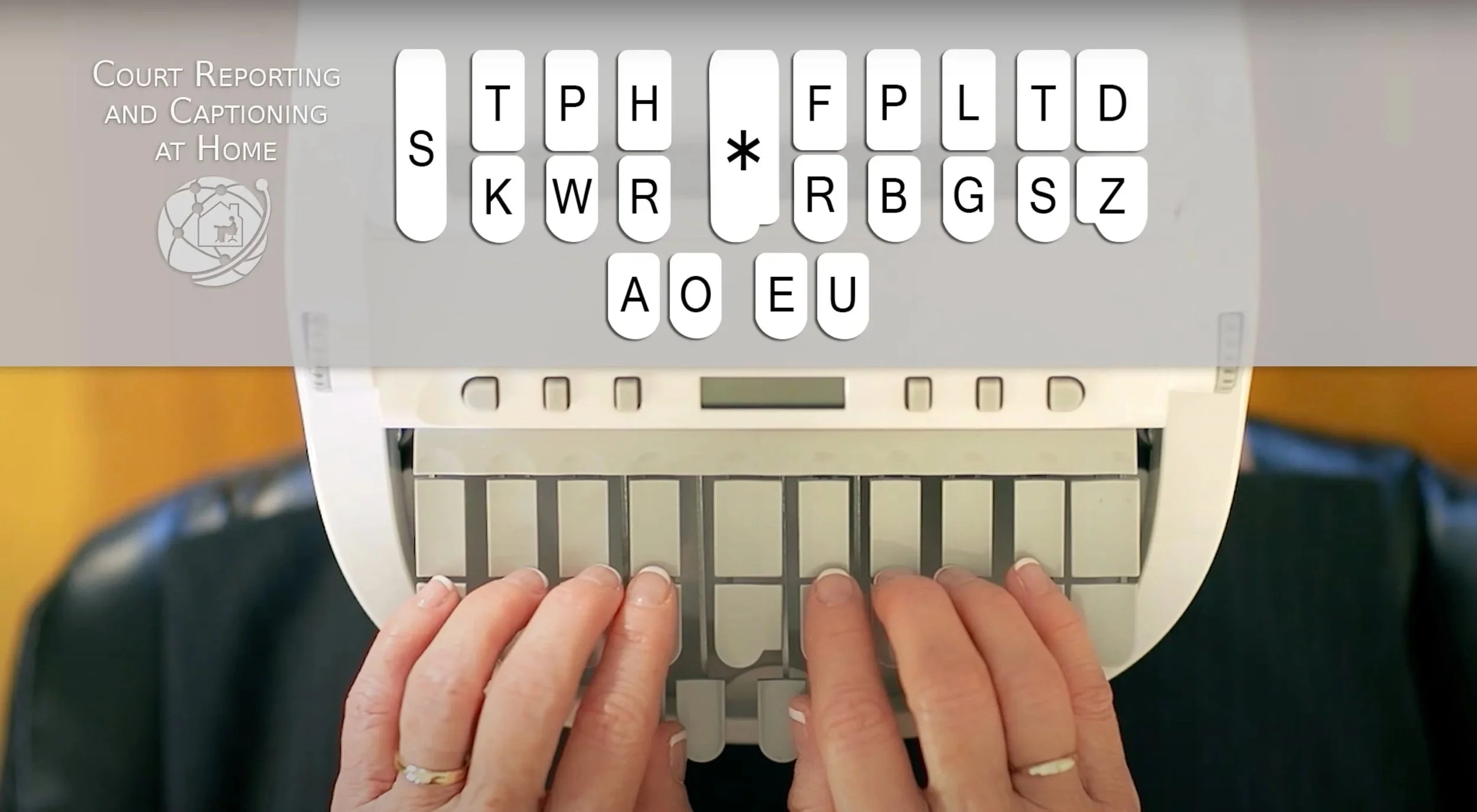
Screenshot taken from Court Reporting and Captioning at Home.
A stenographer usually presses three or more keys simultaneously (known as "chords") for each syllable or sound of a word. Take "STOP," for example. A stenographer would type S and T on the left side (the first part of the word), O on the bottom (for the vowel), and P on the right (for the ending sound). This technique is key to maintaining a fast court reporter typing speed without pressing individual keys for each letter.

Screenshot taken from Qwerty Steno.
But since the court reporter keyboard only has 22 keys, there are obviously some letters and sounds missing from the layout. To accommodate this, professional stenographers use different key combinations to represent a missing letter or sound. This unique keyboard layout allows them to cover all necessary linguistic sounds with a minimal set of keys.
For example, if they need to type a syllable that starts or ends with M, they will type P and H together as a combination code. Also, since vowels don't sound the same in every word (e.g. "bAt" with a short A sound versus "bAit" with a long A sound), there are specific codes for those varying phonetic sounds as well. When all these specialized codes are used together, the shorthand often looks nonsensical to an untrained eye, but it makes perfect sense to a trained stenographer.

Screenshot taken from Qwerty Steno.
To make the process even faster and boost their overall speed, expert stenographers often program their own abbreviations or "macros" for commonly used courtroom phrases, like "May it please the court." This strategic shortcut allows them to significantly reduce the number of necessary keystrokes, further increasing their court reporter typing speed.
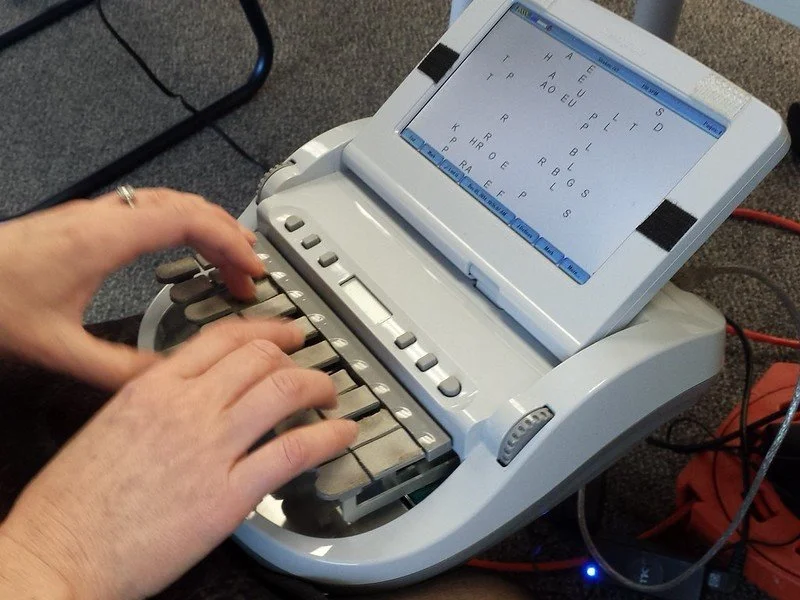
“Stenographer” by Richard Proulx is licensed under CC BY-SA 2.0.
Once the proceedings are captured, stenographs are typically connected to a computer running specialized software. This program immediately translates the complex shorthand (stenography) into a readable transcript.
Court reporters diligently review this computer-aided translation for accuracy before certifying and submitting the official record. This combination of unique court reporter keyboard design, mastery of shorthand techniques, and digital translation tools is what enables enables the required accuracy and high-speed, real-time transcription, often exceeding 200 words per minute.
Curious about how the world works?
Today You Should Know is a free, weekly email newsletter designed to help you learn something new every Friday.
Subscribe today 👇
Sources
Court Reporting and Captioning at Home. (2014). How to Write on the Steno Machine - CALL 877-253-0200 Court Reporting and Captioning at Home. YouTube. Retrieved May 9, 2023, from https://www.youtube.com/watch?v=ZAkkTtsPKOA.
Qwerty Steno. (n.d.). http://qwertysteno.com/Home/
Talty Court Reporters Inc. (2020, October 10). Everything You Need to Know About Court Reporting. Talty Court Reporters Inc. https://www.taltys.com/blog/everything-you-need-to-know-about-court-reporting/