
Is the “five-second rule” legitimate?
The short answer
While time is a factor for how many bacteria contaminate dropped food, the five-second rule is not a legitimate food safety guideline. Bacteria transfer almost immediately on contact, and dropping food on wet or flat surfaces increases the chances of contamination.
The long answer
You may have heard that if you pick up dropped food within five seconds after it hits the floor, it’s still safe to eat. But is there any truth to this rule of thumb?
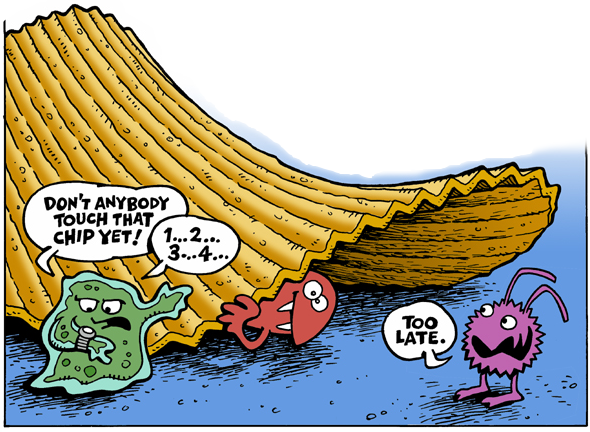
"Five second" by Greg Williams is licensed under CC BY-SA 3.0.
When you drop food, the bacteria living on the floor will adhere to it. How many bacteria transfers depends on three factors: time spent on the floor, wetness of food, and where it landed.
Factor #1: Time spent on the floor
There is a touch of truth to the "five-second rule": Research suggests that the less time the food spends on the floor, the fewer bacteria it picks up. A 2003 study found that cookies and gummy bears retrieved in under five seconds had significantly less E. coli than those left longer.
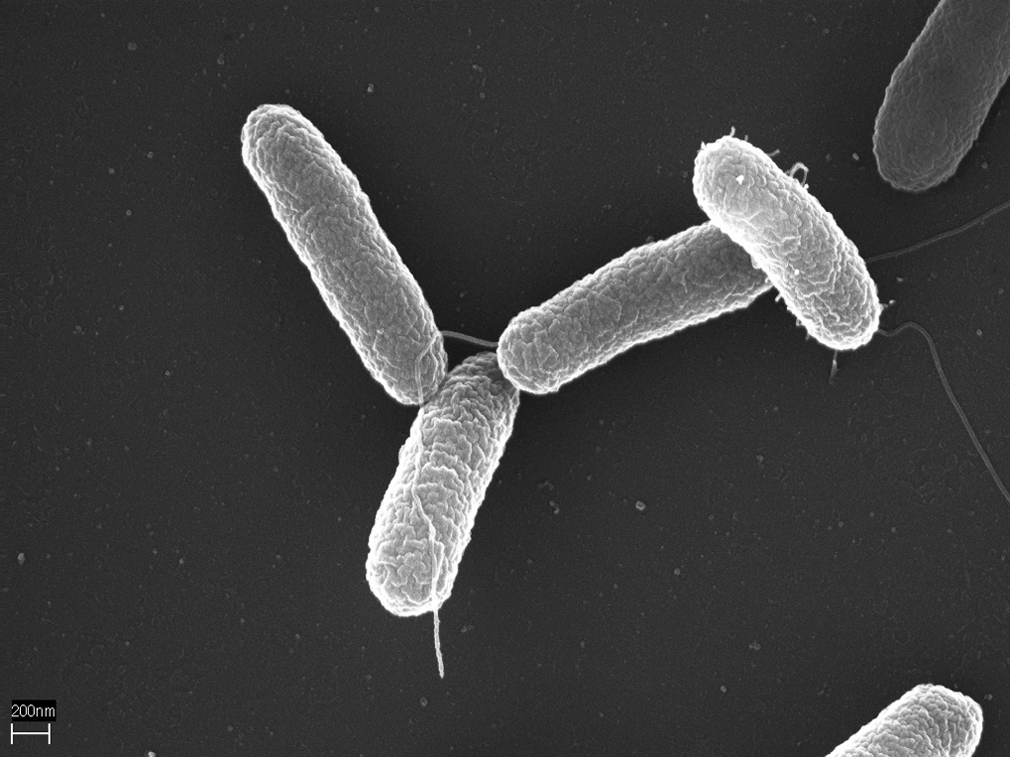
"Salmonella typhimurium" by Volker Brinkmann, Max Planck Institute for Infection Biology, Berlin, Germany is licensed under CC BY 2.5.
However, fewer bacteria doesn’t mean zero bacteria. For some pathogens, like Salmonella, a little goes a long way: some studies suggest as few as 10–100 bacteria can make you sick. And a 2007 study found that Salmonella can last up to 28 days on dry surfaces and transfer to food immediately upon contact.
Factor #2: Wetness of food
For wet foods, you should really have a “zero-second rule.” Moisture helps bacteria transfer from the floor to your food. This is because moisture acts like a vehicle for bacteria. A dry surface can't transfer bacteria onto food nearly as easily as a wet one can.
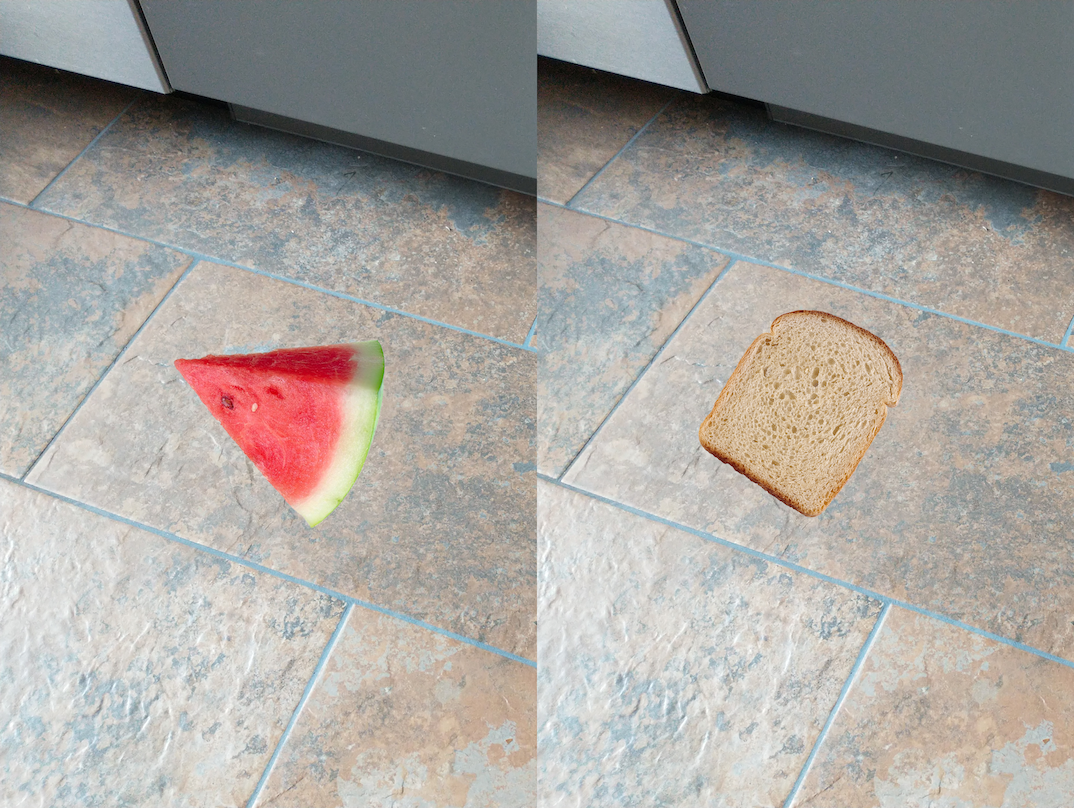
You probably knew this intuitively, but the dry slice of bread is safer to eat than the wet slice of watermelon.
That's why studies consistently find that wet hands, wet gloves, and moist surfaces transfer far more bacteria than dry ones. A dropped grape or a wet slice of deli meat picks up contamination almost instantly, while something dry, like a cracker, gives bacteria less to grab onto and less time to make the jump.
Factor #3: Where the food landed
Where you drop the food also plays into the risk of getting a food-borne illness. Places like kitchens and bathrooms tend to harbor more harmful bacteria due to food preparation, spills, and moisture.
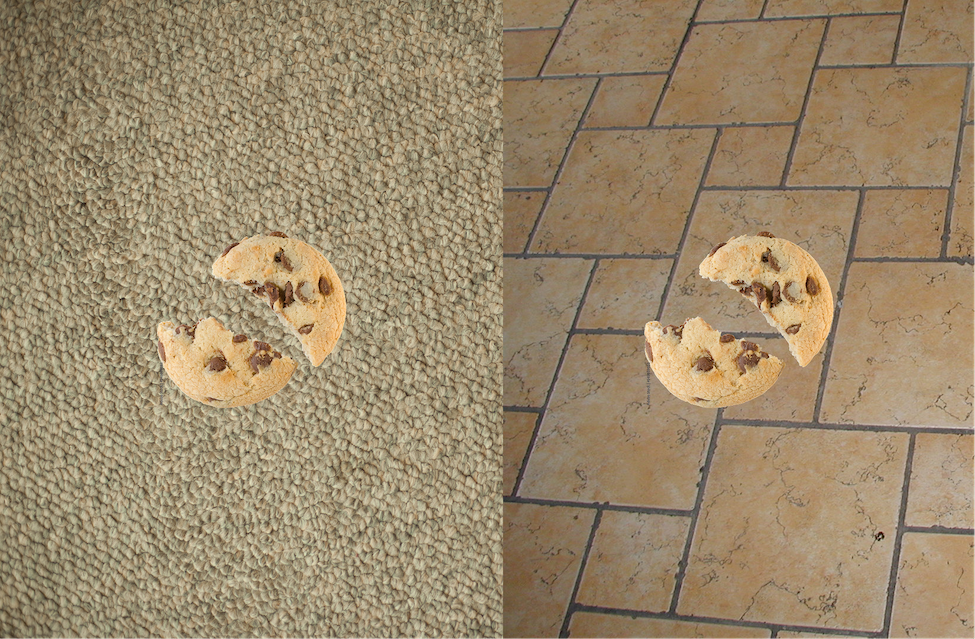
Scientifically, it's safer to eat the cookie that was dropped on carpet than the one dropped on tile.
Flat, hard surfaces like tile and wood also make it easier for germs to transfer than surfaces like carpet. Part of the reason carpet performs better in these tests comes down to its structure. Its fibers can trap bacteria or let them work down into the material, meaning fewer of them stays exposed to transfer onto food that you dropped.
Verdict: The "five-second rule" is scientifically false.
Because bacteria can transfer to food so quickly, following the "five-second rule" is definitely not a science-backed food safety guideline. But if you’re going to abide by it, at least skip eating wet food you've dropped in a kitchen, and, at the very least, wash it before taking a bite.
Curious about how the world works?
Today You Should Know is a free, weekly email newsletter designed to help you learn something new every Friday.
Subscribe today 👇
Check out some other curious questions:



Sources
Dawson, P., Han, I., Cox, M., Black, C., & Simmons, L. (2006). Residence time and food contact time effects on transfer of salmonella typhimurium from tile, wood and carpet: Testing the five-second rule. Journal of Applied Microbiology, 0(0). https://doi.org/10.1111/j.1365-2672.2006.03171.x
Deardorff, J. (2010, August 9). Capsule: The five-second rule. Los Angeles Times . https://www.latimes.com/archives/la-xpm-2010-aug-09-la-he-capsule-20100809-story.html
Greenemeier, L. (2014, March 25). Fact or Fiction?: The 5-Second Rule for Dropped Food. Scientific American. https://www.scientificamerican.com/article/fact-or-fiction-the-5-second-rule-for-dropped-food/
McGee, H. (2007, May 9). The five-second rule explored, or how dirty is that Bologna?. New York Times. https://www.nytimes.com/2007/05/09/dining/09curi.html
Skarnulis, L., & Chang, L. (n.d.). “5-Second Rule” Rules, Sometimes. WebMD. https://www.webmd.com/a-to-z-guides/features/5-second-rule-rules-sometimes-
University of Illinois. (2003, September 2). If You Drop It, Should You Eat It? Scientists Weigh In on the 5-Second Rule. University of Illinois College of Agricultural, Consumer and Environmental Sciences. https://web.archive.org/web/20190710010623/https://aces.illinois.edu/news/if-you-drop-it-should-you-eat-it-scientists-weigh-5-second-rule
Whitman-Salkin, S. (2014, March 15). Scientists Study What to Do If You Drop a Cookie on the Floor. National Geographic . https://www.nationalgeographic.com/culture/article/140315-five-second-rule-bacteria-food-safety



We Americans sure do like American things.