
The short answer
Asphalt is the budget-friendly, quick-to-install choice for most city and residential streets. Concrete is the long-haul pick for busy, heavy-load highways, where its durability makes the higher upfront cost worth it.
The long answer
You tumble out of bed, stumble to the kitchen. Pour yourself a cup of ambition, and yawn and stretch and try to come to life.
It's time for the morning commute to your 9-5.
You back your car out of your concrete driveway onto an asphalt road. Later you hop on to the concrete highway, exit onto an asphalt city street, and park in a concrete parking lot.
Trying to distract yourself from thoughts about how you're just a step on the bossman's ladder, you wonder, "Why are some roads made from concrete and others asphalt?"
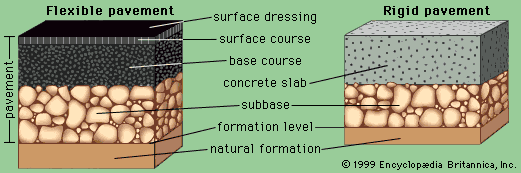
Asphalt is known as "flexible" pavement, whereas concrete is considered "rigid" pavement. Source: Britannica
Let's get into the differences between asphalt and concrete and why different roads use different materials.
What is asphalt?
Asphalt is a composite material made up of about 95% stone, sand, and gravel and 5% an asphalt binder, usually bitumen.
Bitumen is a highly viscous, sticky, semi-solid form of petroleum that acts as a kind of glue, waterproofing the surface and letting asphalt flex a bit as temperatures change.
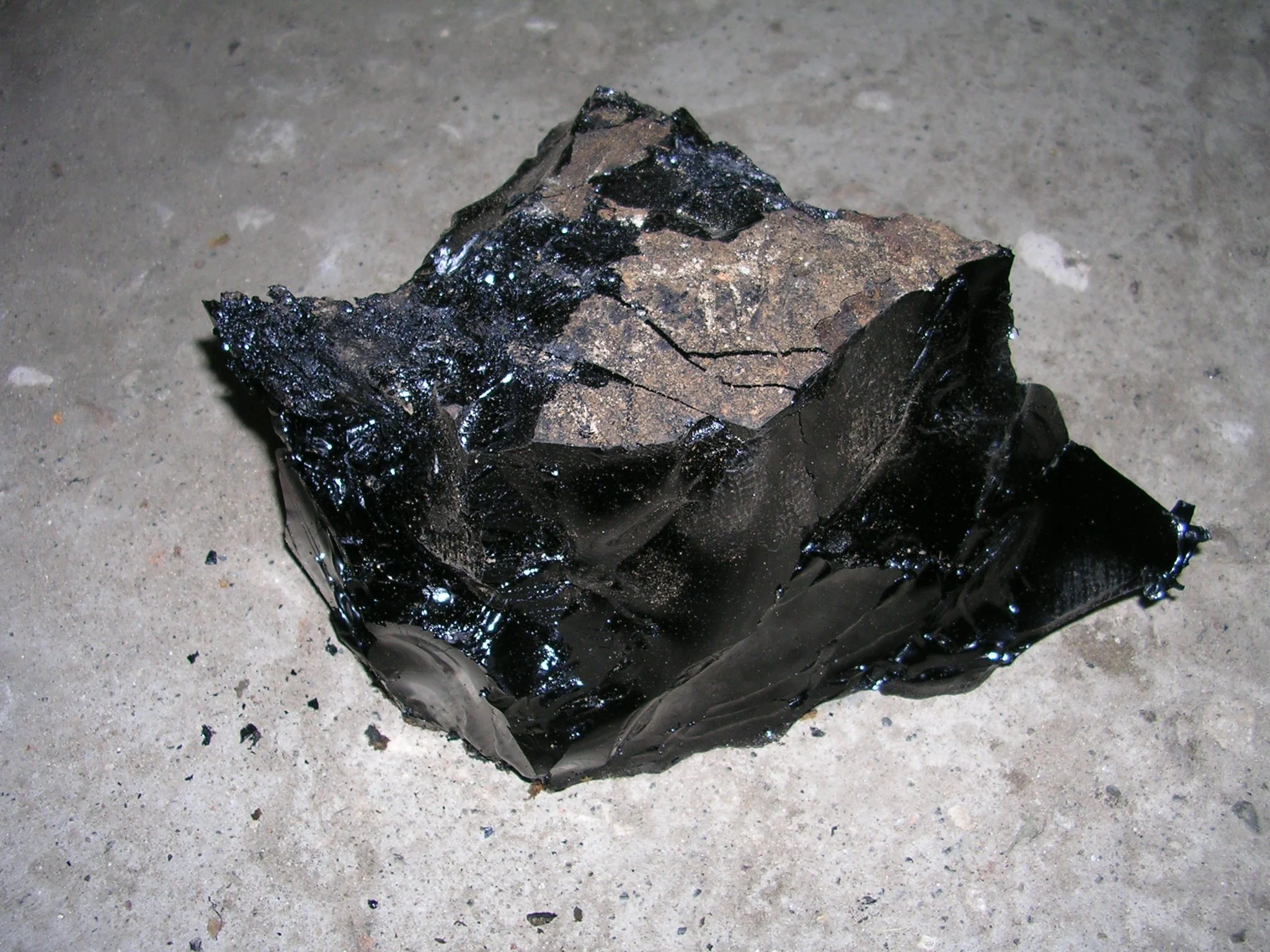
"Refined bitumen" by Burger is part of the public domain.
A short detour: I can't mention bitumen without sharing my favorite bitumen fact. It's the star of one of the longest running scientific experiments. The University of Queensland runs the pitch drop experiment, which demonstrates how bitumen appears solid but is actually just an incredibly thick liquid. In 1927, Thomas Parnell poured heated bitumen into a funnel and then waited for it to flow. Since the experiment has started, there have been nine droplets. You can watch the livestream of the 10th drop.
As of 2024, asphalt is the dominant roadway surface material in the United States, covering about 85% of 2.8 million paved miles (~4.5 million km) nationwide.
What are the benefits and drawbacks of asphalt roads?
Asphalt is widely used because it has significant cost, logistics, and other meaningful benefits, but there are of course tradeoffs.
Benefits of using asphalt:
✅ Low installation cost: Installing asphalt roads is typically around ~40% cheaper than concrete.
✅ Quick to install: Asphalt can be laid in a matter of hours and be ready for traffic as soon as the surface cools, sometimes the same day.
✅ Low repair cost: Repairing cracks and potholes in asphalt usually only requires a quick patch, making it easier and cheaper to maintain.
✅ Quieter to drive on: You've probably noticed that driving on asphalt makes less noise than concrete. According to a 2013 study, asphalt roads reduce sound by up to 7 decibels, making it a good choice for urban and residential streets.
✅ Safer for cold, wet weather: Asphalt has safety perks, including its heat-absorbing black surface which provides better traction in wet weather by helping snow and ice melt and rainwater evaporate. Its rough texture makes for better tire grip for roads with frequent turns, stops, and starts.
Drawbacks of using asphalt:
❌ Requires frequent maintenance: Asphalt deteriorates more quickly than concrete, is more prone to potholes, and usually needs resurfacing after roughly 15 to 20 years.
❌ Softens under extreme heat: Asphalt's dark surface absorbs heat and can soften and become sticky to drive on in extreme heat. While it hardens when temperatures cool, this cycle of softening and hardening can cause cracks and sags in the surface.
❌ Contributes to urban heat island effect: Heat islands occur when an urban area becomes hotter than surrounding rural areas. Asphalt roads exacerbate this effect due to their heat absorption.
In short, asphalt is the budget-friendly, quick option for road engineers, but you do pay for that convenience over time with more frequent maintenance. This makes asphalt generally a good option for city and residential roads that don't experience extreme heat.
What is concrete?
Concrete is another composite material, but instead of using bitumen as a binder, it uses cement. Specifically, concrete is a combination of dry aggregates (rock, gravel, sand), cement, and water.
Cement and concrete often get mixed up, but they are not the same. Cement is a man-made material commonly combining limestone, sand, clay, and other raw materials. This mix is superheated until it partially melts, cools, and then is ground into a fine powder we call cement.
Why go through the trouble of melting rocks? Well, when you add water to cement, a powerful chemical reaction called hydration begins. Water triggers microscopic crystals to develop and bind particles together.
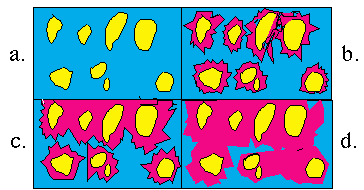
A simple diagram showing the chemical reaction caused by adding water to cement, resulting in microscopic crystals to develop and bind the aggregate (rock and sand) together in concrete.
Source: University of Illinois
Another common misconception is that concrete simply "dries." While some water evaporates, the chemical reaction that makes concrete rock-hard requires water to stick around so the cement crystals can bind firmly together and allow the concrete to "cure" properly.
As of 2024, concrete makes up about 23% of U.S. interstate highway miles but only ~6% of all paved roads.
What are the benefits and drawbacks of concrete roads?
It's no surprise that concrete is often the pick for heavy-load, high-trafficked highways, as it provides much greater durability than asphalt, along with other benefits.
Benefits of using concrete:
✅ Durable and long-lasting: Depending on the exact type, concrete roads can last up to 40-60 years before they need major repair or replacement. This is a major advantage for roads with high volumes of traffic and heavy-load corridors.
✅ Better fuel efficiency: Because of its stiff and smooth surface, concrete can be better for fuel consumption. According to the European Concrete Paving Association, analysis has shown a 2% fuel savings for vehicles driving on concrete roads compared to asphalt.
✅ High reflectivity: Concrete's lighter color reflects more light than asphalt, which reduces heat buildup in hot environments and can improve visibility for nighttime driving.
Drawbacks of using concrete:
❌ Higher installation cost: Concrete requires a larger upfront investment than asphalt due to higher costs of construction and materials.
❌ Long curing time: Concrete usually needs at least a week to cure enough for roads to re-open for passenger vehicles. Roads used for heavy loads like RVs, trailers, and trucks can take even longer to be ready, as concrete is considered fully cured after 28 days.
❌ Costly, disruptive repairs: Unlike asphalt which you can simply patch, concrete often requires a full slab to be removed and replaced. Tack on the time needed for curing, and concrete repairs can be costly and disruptive.
❌ Prone to cracking in extreme weather: When temperature swings cause concrete to expand and contract, it becomes susceptible to cracking. Road salt used to melt snow and ice also deteriorates concrete.
You spend more time and money upfront with concrete, but in exchange you get decades more of durable roadway.
How do you pick between concrete and asphalt?
When picking between concrete and asphalt, there are tons of pros and cons to noodle on. Road engineers consider each material's durability, costs, required maintenance, noise, fuel efficiency, reflectivity, along with the location and purpose of the road. A lifecycle cost analysis, evaluating all of the key factors, is often used to evaluate whether it makes more sense for a road to be concrete or asphalt (or a combination of the two).
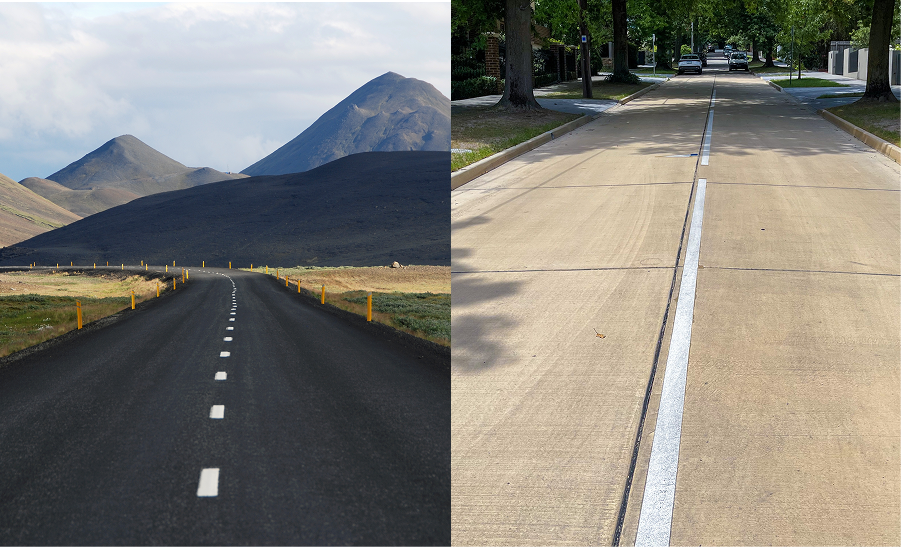
Left: "Asphalt road under the hills (Unsplash)" by Bec Brown is part of the public domain. Right: Roboflow
Environmental impact should also be mentioned here. As far as what's better for the planet, there's no clear winner between concrete and asphalt. Both technically can be recycled to lower the carbon footprint and reduce costs of new raw materials.
Concrete’s environmental edge, if it has one, comes from its long lifespan and possible fuel savings. Cement production is a major source of CO₂, while asphalt relies on petroleum and energy-hungry heating, and lifecycle studies vary depending on the road’s design and traffic.
Curious about how the world works?
Today You Should Know is a free, weekly email newsletter designed to help you learn something new every Friday.
Subscribe today 👇
Check out some other curious questions:



Sources
American Asphalt, Inc. (2023, March 10). Why Use Concrete for Roads Instead of Asphalt?. American Asphalt. https://americanasphalt.com/why-use-concrete-for-roads-instead-of-asphalt/
Asphalt Doctors Inc. (2025, May 27). Why Do They Use Concrete for Highways?. Asphalt Doctors. https://asphaltdoctors.net/why-do-they-use-concrete-for-highways/
Civil Mentors. (2023, May 14). Concrete Road vs Asphalt Road: The Great Debate!. YouTube. https://www.youtube.com/watch?v=g6huc6k4vuA
European Asphalt Pavement Association. (2025, October 16). What is Asphalt. EAPA. https://eapa.org/what-is-asphalt/
InfraProjects Group Pvt Ltd. (2024, January 9). Asphalt vs. Concrete: The Melbourne Perspective – A Guideline for Decision Makers. Infra Project. https://infra-projects.com.au/asphalt-vs-concrete-the-melbourne-perspective-a-guideline-for-decision-makers/
Kral, H. (2024, October 7). The Science Behind Concrete and Why it Matters for Pros. Family Handyman. https://www.familyhandyman.com/list/what-is-concrete/
Lewis, J. (n.d.). Scientific Principles. Materials Science and Technology Teacher’s Workshop. https://matse1.matse.illinois.edu/concrete/prin.html
Madan, D. (2025, October 23). Asphalt vs. Cement: Building Better Roads Through the Right Material Choice. Sripath Technologies, LLC. https://sripath.com/asphalt-vs-cement-building-better-roads-through-the-right-material-choice/
Murphree Paving. (2024, August 30). Asphalt or Concrete: Which is the best choice for your paving project?. Murphree Paving. https://www.murphreepaving.com/asphalt-concrete-comparison/
Petruzzello, M. (n.d.). Why Are Roads Made of Asphalt?. Britannica. https://www.britannica.com/story/why-are-roads-made-of-asphalt
Sakrete. (2023, February 6). The Difference Between Cement and Concrete. Sakrete. https://www.sakrete.com/blog/post/the-difference-between-cement-and-concrete/
US Department of Transportation. (2025, November 1). Highway Statistics 2024. FHWA. https://www.fhwa.dot.gov/policyinformation/statistics/2024/



We Americans sure do like American things.