
Why do clams squirt water?
The short answer
Clams squirt water as a byproduct of filter-feeding, as an involuntary reaction when they snap shut to hide from predators, and — in certain mussel species — to shoot their larvae into the gills of passing fish.
The long answer
I have to be honest. Before I received this question, I never really thought much about clams. I don't live near a beach or eat seafood, so I would have clammed up if asked about clam facts.
Until now.
Before we get into why clams squirt water, here are a few rapid-fire clam facts for ya:
Clams have no brain. They have a cluster of nerve cells called ganglia and sensory organs to detect the world around them.
Many clams start out as males producing sperm and, later in life, transition into females producing eggs. This makes them sequential hermaphrodites.
There are over 15,000 species of clams, ranging in size from 2mm (the pygmy pea clam) to 1.2m (the giant clam).
And, of course, clams can squirt out water. If you haven't seen this before, here's a symphony of clams putting on a show:
A note before we begin: Given how diverse clam species are, their reasons for squirting water aren't universal, but many are shared across species.
Reason #1: Clams are filter-feeders and "spit out" what's left after filtering.
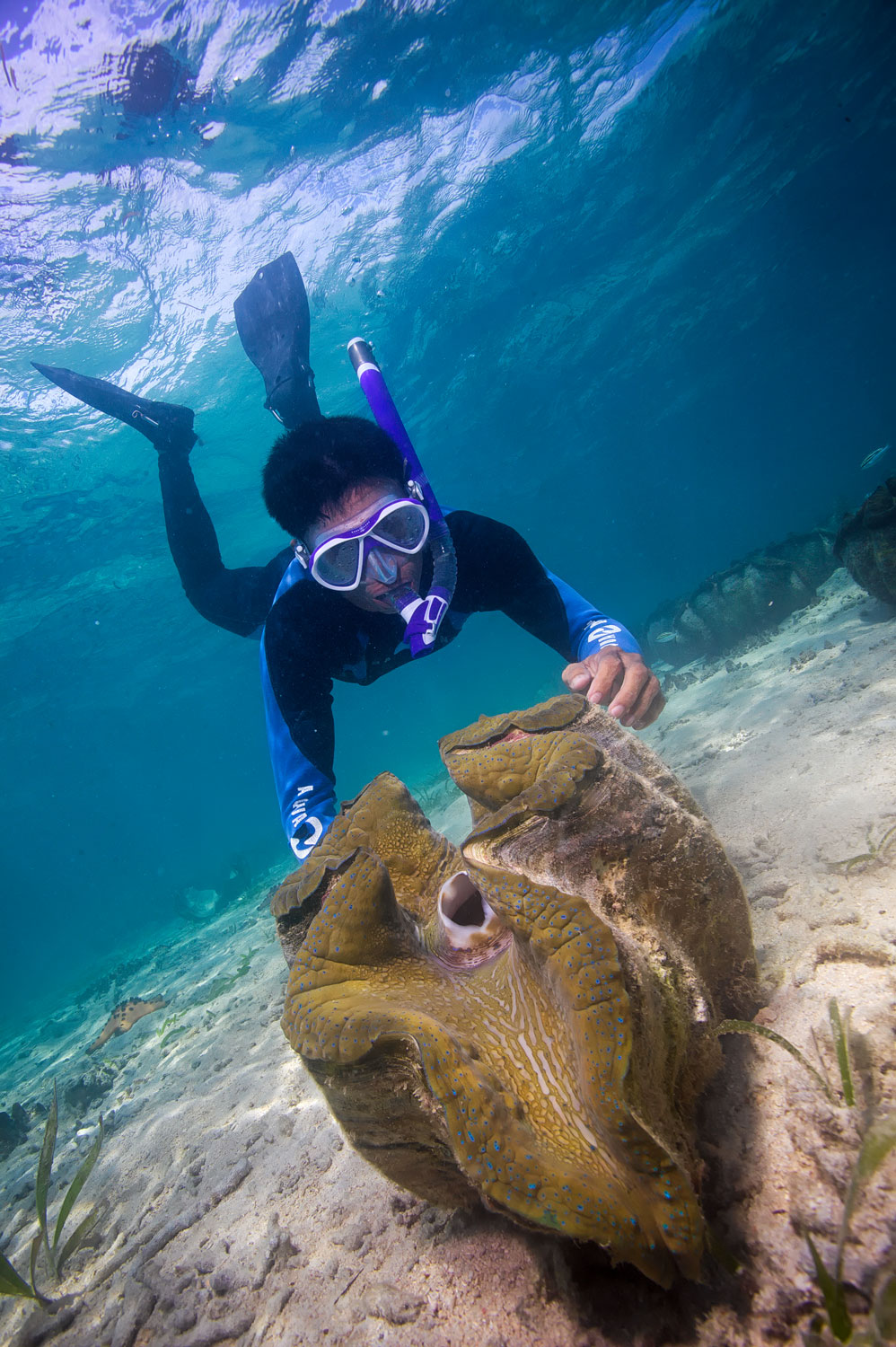
Clams have two siphons that they use to eat, breathe, and expel waste (and water.) One siphon brings in water and the other pushes it out.
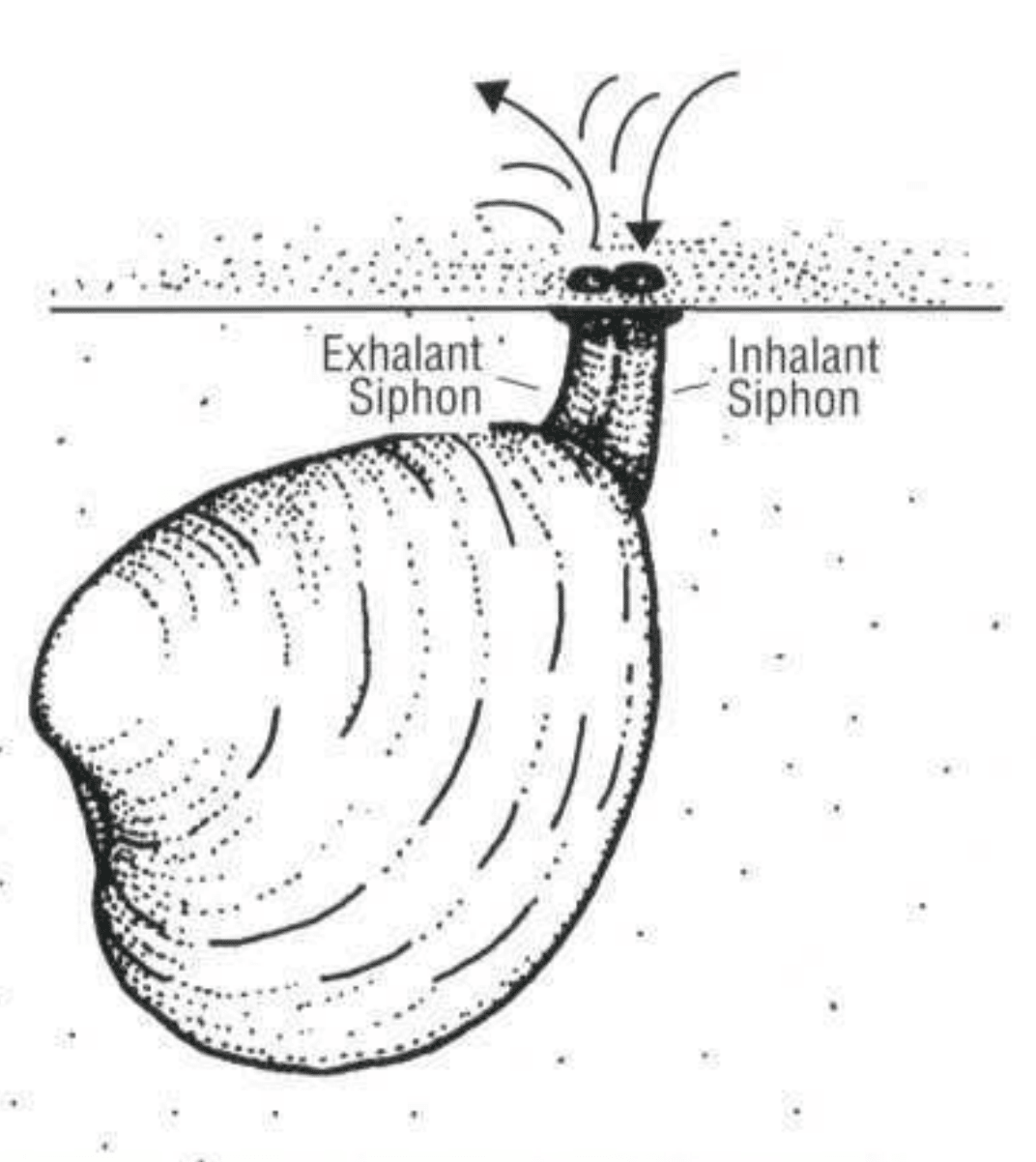
The water they bring in is filtered through hair-like cilia covering their gills to capture food and oxygen. The leftover water and waste is then pumped out through the other siphon.
They are quite impressive filter-feeders: A single ~50mm clam can filter ~17 liters of seawater per day. Watch a 100-minute timelapse of two dirty aquariums and see the clams work their filter magic:
A common reason clams squirt water is because they are simply breathing and eating. Once they've filtered out the oxygen and food they need from the water, they expel it out the other siphon. With enough gusto, this can cause the clam to appear like they're "spitting" into the air.
Reason #2: Clams quickly close their shells when they sense danger, resulting in a startled squirt.
While you'd be hard pressed to find them a shoe that fits, clams have feet. Many clam species use their muscular foot muscle to burrow themselves in beach sand. This allows them to feed on the incoming tide while remaining out-of-sight from predators like crabs, birds, and fish.
Here's another clam timelapse for you (5x-speed). Watch a pacific razor clam bury itself in sand and expel the sand it inadvertently collected in doing so.
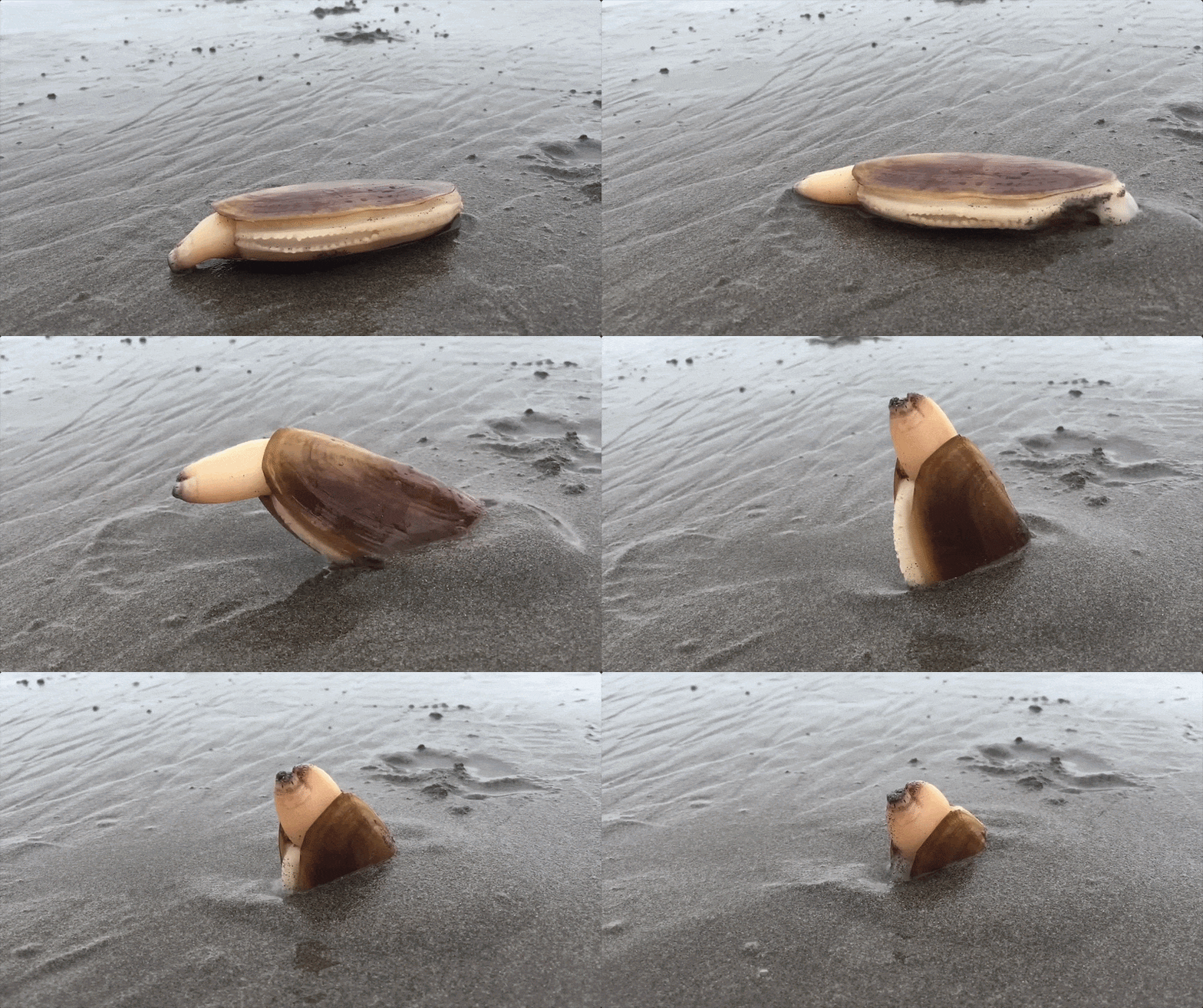
Source: The Pet Collective Too
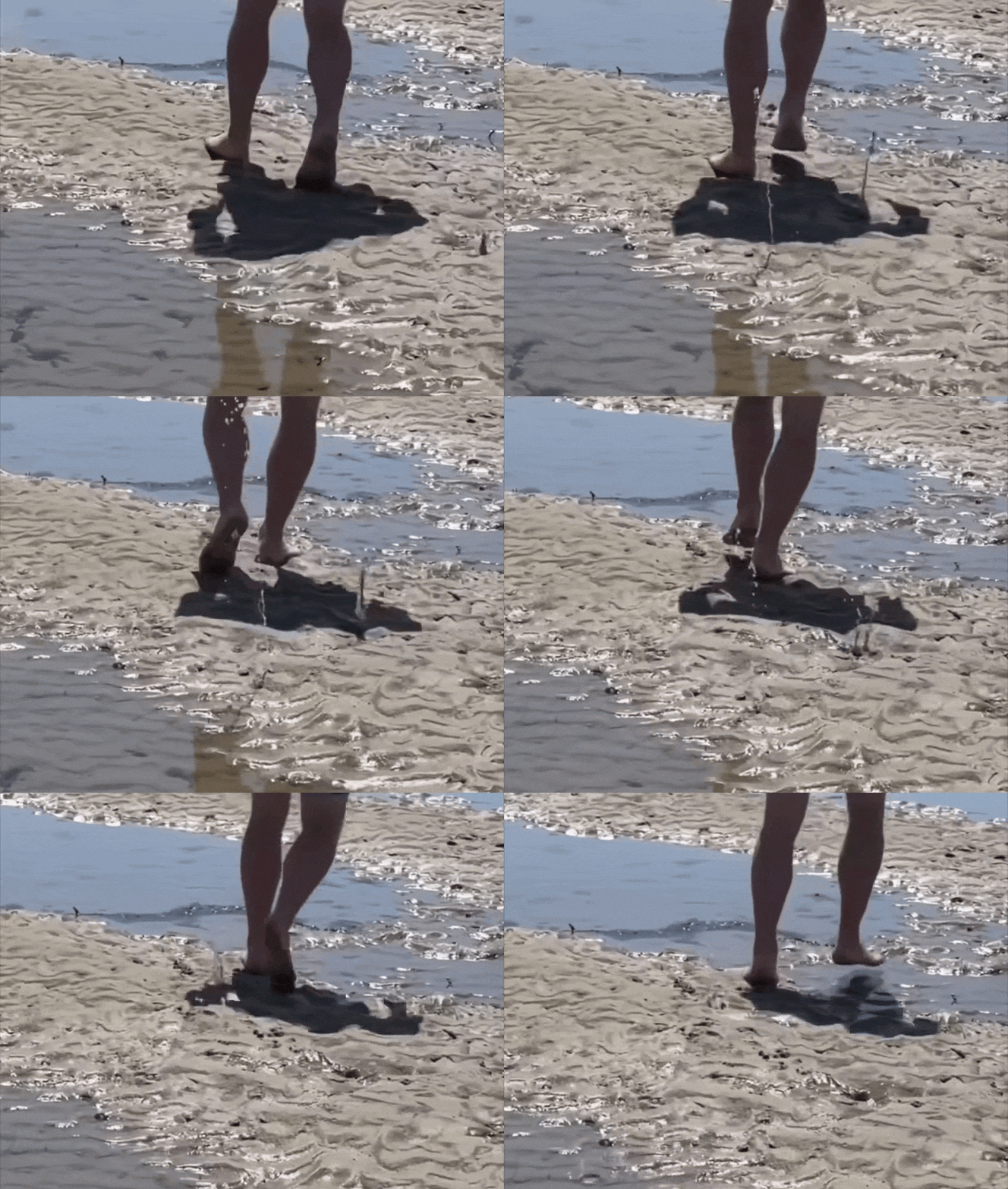
Burrowing offers them protection, but they can't remain fully buried all of the time. So when a clam hears vibrations in the sand (predator warning!), they will quickly use that foot to bury themselves.
But there's one flaw with this defense strategy: clams accidentally reveal themselves to the predator. When a clam senses a threat, it snaps its shell shut to burrow, which inadvertently forces water out.
In 1885, a scientist put it eloquently:
“This discharge of water at the approach of footsteps, thus betraying its retreat, is an act which the mollusk cannot help.”
"Guidem michelin 1900" is part of the public domain.
Reason #3: Some mussels are parasites that use fish to disperse their larvae a greater distance.
Note: Mussels are not the same thing as clams, but they are very closely related. I hope you'll forgive me for including a mussel fact in a clam article. I couldn't resist including this last bit of info.
When my parents first sent me off into the world on my own, I was lucky enough to be left with groceries, hugs, and reminders to call home.
For the thick shelled river mussel (Unio crassus), it's not such a gentle goodbye.
Found in the streams and rivers of Central Europe, U. crassus has a peculiar habit. It uses its foot to position itself on the edge of a stream, facing the water at a right angle. Then it sucks in water and powerfully squirts it back into the stream over a meter away. It continues this spitting routine up to several hours.

A thick shelled river mussel spurting into a river, with a school of host minnow fish downstream.
Source: Journal of Molluscan Studies
In 2005, scientist Heinrich Vicentini decided to solve the mystery of the spitting mussels (mussels are close cousins of clams). Vicentini collected water from the U. crassus's squirt streams and discovered it was full of mussel larvae.
In other words, these mussel parents are quite literally launching their little mussel children into the world.
U. crassus squirts its larvae in a stream of water so that they can get trapped in the gills of unsuspecting fish. This allows the mussels to travel a greater distance, so they don't have to compete as much for resources. Technically this makes U. crassus a parasite.
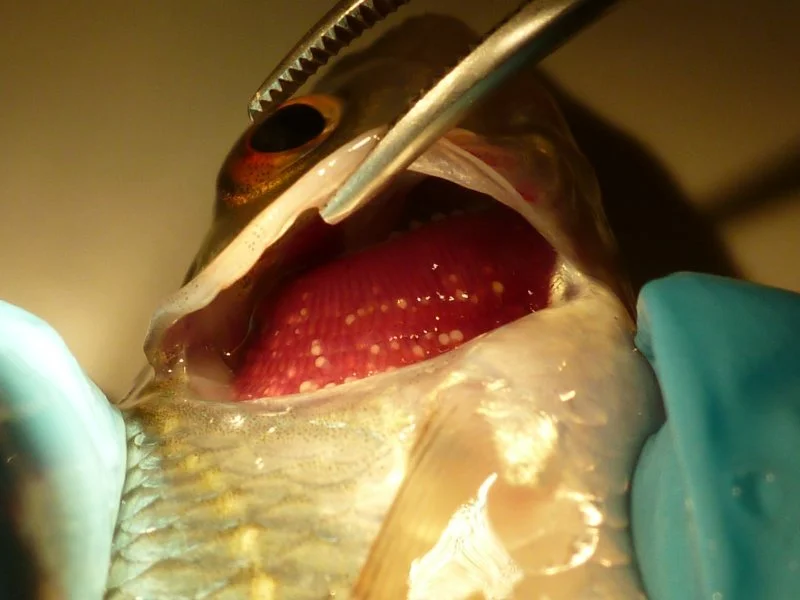
A freshwater fish (loach) with thick shelled river mussel larvae attached to its gils.
Source: Clamsplaining
When the baby mussels are ready, they detach from the fish gills and go with their lives, eventually cannonball-ing their own children into the world.
Isn't life wonderfully strange?
Curious about how the world works?
Today You Should Know is a free, weekly email newsletter designed to help you learn something new every Friday.
Subscribe today 👇
Check out some other curious questions:



Sources
Dunn, C. (2024, October 29). Our Top Facts About Clams. Original Diving. https://www.originaldiving.com/blog/top-clam-facts
Lockwood, S. (1885, April). THE CLAM-WORM. https://www.journals.uchicago.edu/doi/pdf/10.1086/273925
Sturmer, L. (2015, April). Hard Clams. Southern Regional Aquaculture Center. https://www.yumpu.com/en/document/view/41059302/biology-and-culture-of-the-hard-clam-srac-fact-sheets
University of Florida. (2026, March 18). Environmental Benefits. Florida Aquaculture Program. https://shellfish.ifas.ufl.edu/environmental-benefits/
Washington State University. (2021, August 27). Dr. Universe: When would a clam open its shell? Why do the shells open? As far as I know, it opens when boiled for food. - Teng, 5, China. Ask Dr. Universe. https://askdruniverse.wsu.edu/2021/08/27/dr-universe-clam-open-shell-shells-open-far-know-opens-boiled-food-teng-5-china/
Wescott, W., & Daemon, D. (1998). A Guide to Recreational Clamming: Keyholing. North Carolina Sea Grant. https://ncseagrant.ncsu.edu/ncseagrant_docs/products/1990s/rec_clamming_keyholing.pdf


We Americans sure do like American things.