
Why do leaves kill grass but snow does not?
The short answer
Leaves can kill grass if they pile up thickly, blocking light and airflow, but a light layer can fertilize and support soil health. Snow usually doesn’t hurt grass and may help it survive winter by insulating it and adding moisture and nutrients, though problems like snow mold can occur.
The long answer
In the fall season, a common sequence of events occurs:
Step 1: Tree leaves change from green to oranges, reds, and yellows.
Step 2: The leaves fall to the ground.
Step 3: People dutifully rake, blow, and lawnmower the leaves off their lawns.
All this leaf-moving happens because it's common (though debated) gardening advice that removing piled up leaves can help protect your lawn. But if leaves supposedly kill grass, why doesn't snow?
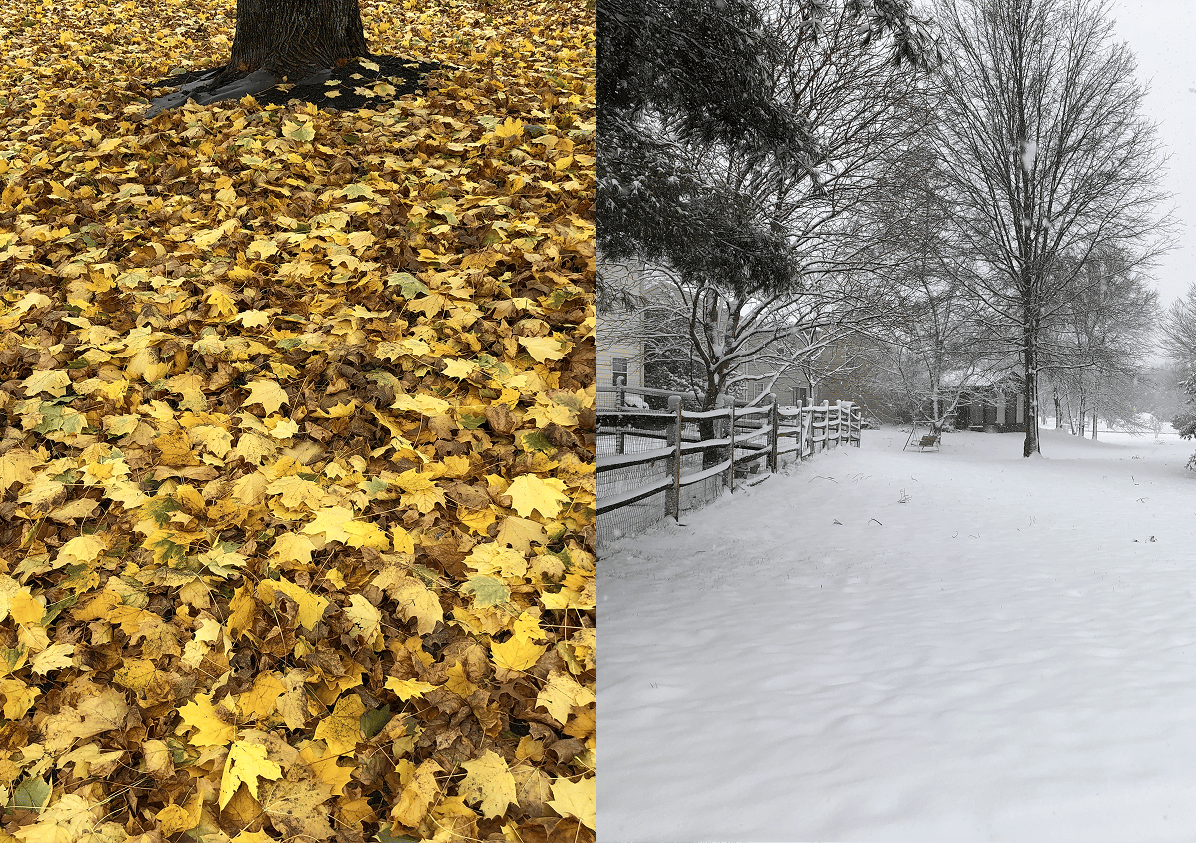
Which lawn will fair best come springtime?
Left: "2022-11-06 14 28 26 Autumn leaves of a Norway Maple on a lawn along Windybush Way in the Mountainview section of Ewing Township, Mercer County, New Jersey" and Right: "2018-03-21 10 29 12 A snow-covered lawn along Tranquility Court in the Franklin Farm section of Oak Hill, Fairfax County, Virginia" by Famartin are licensed under CC BY-SA 4.0.
As with most questions, the answer is not black and white. Both leaves and snow can kill grass, but not always. Here's why:
Do leaves kill grass?
Leaves can kill grass, but only if they're left to excessively pile up.
A thick mat of leaves where you can barely see the grass can block sunlight, trap moisture, and limit airflow. Like any plant, grass needs to photosynthesize and when piles of dead leaves smother it, it can die.
Heavy piles of leaves can also lead to the proliferation of lawn diseases since mold and fungus can grow in these low-airflow and dark environments. It's recommended to keep leaf cover below about 20% of your lawn to avoid harming the grass.

The thick layer of the leaves on the left could kill grass. But the sparse amounts of leaves on the right will fertilize and allow the grass to live.
Left: "2022-11-07 07 44 19 Autumn leaves of a Red Oak on a lawn along Lochatong Road in the Mountainview section of Ewing Township, Mercer County, New Jersey" by Famartin is licensed under CC BY-SA 4.0. | Right: "Plen med visne blader (2)" by Peulle is licensed under CC BY-SA 4.0.
But you can andshould leave some leaves on your lawn. The fallen leaves are free fertilizer for your grass, chock full of nitrogen, phosphorus, and potassium. When you let some decompose, it returns this organic matter to your lawn and can improve soil health.
And while not specifically related to grass health, it should be noted that dead leaves provide a habitat for insects, spiders, slugs, and small animals. So it can be environmentally friendly to leave your leaves, especially in places where grass is unlikely to grow anyways, like directly under a tree.
Does snow kill grass?
No, snow usually doesn't kill grass and can even help it survive the winter.
When winter rolls around and sunlight becomes less available, grass goes into a period of dormancy to conserve energy and survive the season. Heavy snow can block sunlight, but it's simply not as much of an issue since the dormant grass is not relying on photosynthesis as much.
In fact, snow has several benefits that help dormant grass survive the winter.
✅ Snow protects grass from extreme cold: The main benefit is that snow can insulate the lawn and protect it from the harshest cold temperatures, especially harsh winds and repeated frost-thaw cycles.
✅ Snow provides nitrogen to grass: Snow can capture nitrogen from the air as it falls. When it melts, grass absorbs this fertilizing nutrient to give itself a boost for spring growth. Snow has even been called "poor man's fertilizer" for this reason.
✅ Snow adds moisture to grass: Grass can get water from the melting snow, which helps it survive, especially when cold winds would otherwise dry it out.
But there are also some ways that snow can harm grass. Here are some negative effects of snow on your lawn:
❌ Snow mold can kill grass: When snow gets piled up, it can create a damp environment leading to snow mold, a fungal lawn disease. As the snow melts away, patches of grass affected by the disease will be dead or bleached by snow mold.
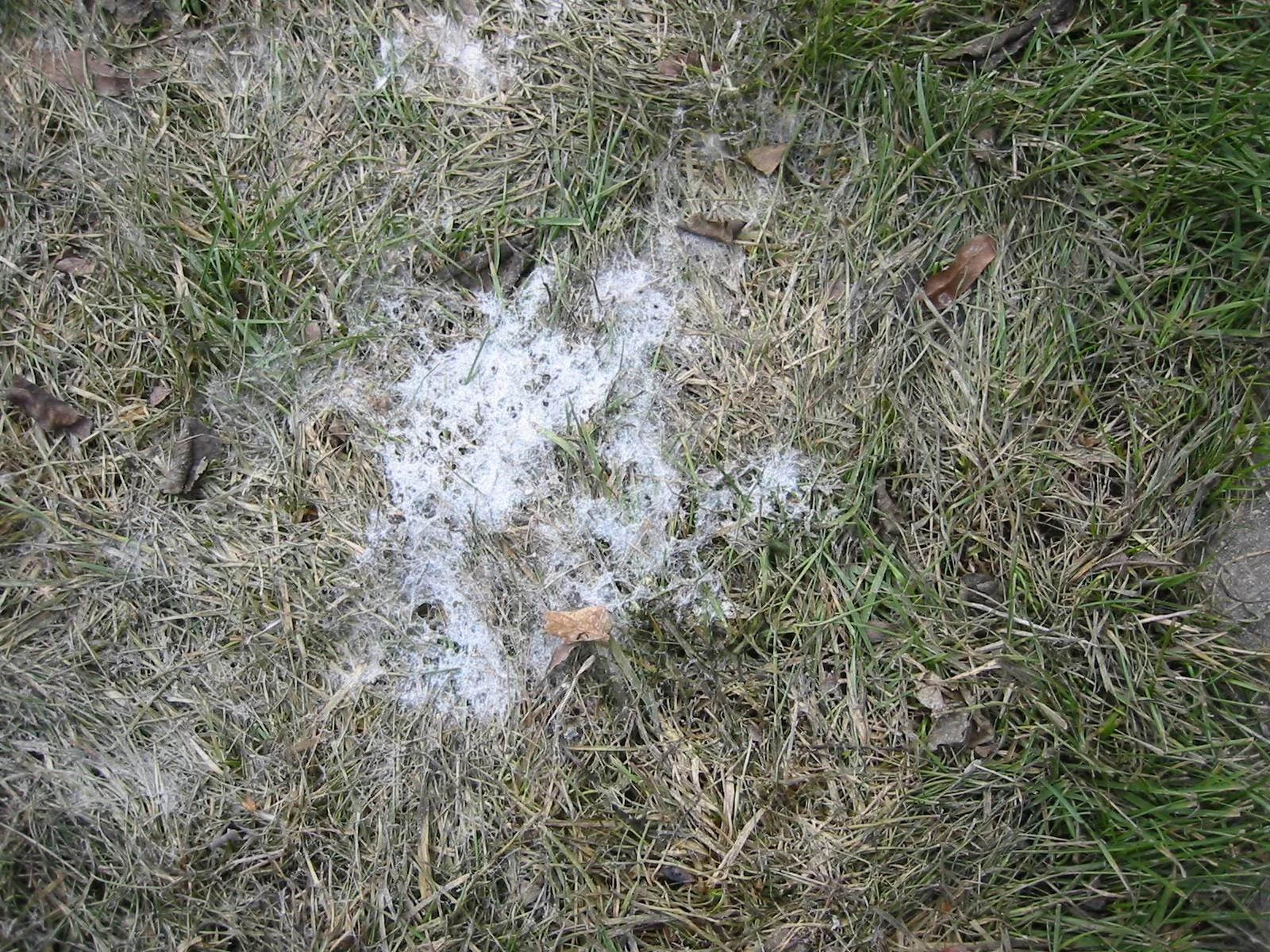
"Snow Mold (436856222)" by noricum is licensed under CC BY-SA 2.0.
❌ Walking on snow can kill grass: While tempting to walk on a snow-covered lawn, each footstep compacts the snow, which can make it harder for air and water to reach the roots of your grass. In the springtime, you may notice footprints of death when the snow melts.
Overall, a moderate dusting of snow can be a good thing for your lawn. But if you're concerned for your lawn's winter health, then rake heavy piles of leaves before snow falls (which can be breeding grounds for snow mold), make sure your lawn has proper drainage, and avoid making snow angels if you can resist the temptation.
Curious about how the world works?
Today You Should Know is a free, weekly email newsletter designed to help you learn something new every Friday.
Subscribe today 👇
Check out some other curious questions:

Sources
Alfuth, D. (2023, September 8). Leave the Leaves. To rake or not to rake?. Wisconsin Horticulture. https://hort.extension.wisc.edu/2023/09/08/leave-the-leaves-to-rake-or-not-to-rake/
Bauer, S. (n.d.). Good Question: Do you really need to rake all those leaves?. Turfgrass Science. https://turf.umn.edu/news/good-question-do-you-really-need-rake-all-those-leaves
David, L. (2025, September 29). Why Experts Say You Shouldn’t Let Leaves Pile Up. Southern Living. https://www.southernliving.com/leaves-good-for-lawn-11815113
Doubek, J. (2022, October 25). Why experts say you shouldn’t bag your leaves this fall. NPR. https://www.npr.org/2022/10/25/1131114849/leaves-fall-autumn-compost-mulch-grass-lawn-nutrients
Lawn IQ. (2023, March 14). How does snow affect your lawn?. Lawn IQ. https://www.lawn-iq.com/lawn-iq-blog/how-does-snow-affect-your-lawn
LawnPride. (2017, December 14). The Importance of Keeping Off Your Snow-Covered Lawn. LawnPride. https://lawnpride.com/keep-off-snow/
Perennial Lawn Care. (2024, December 20). The Impact of Snow and Ice on Your Lawn: What You Need to Know. Perennial Lawn Care. https://www.perenniallawncare.com/the-impact-of-snow-and-ice-on-your-lawn-what-you-need-to-know/
Rachel the Gardener. (2022, January 22). Lawns and Snow. Rachel the Gardener. https://rachel-the-gardener.blogspot.com/2022/01/lawns-and-snow.html
Stearns, S. (2021, August 23). Leaf Disposal & Mulch Mowing. Integrated Pest Management. https://ipm.cahnr.uconn.edu/leaf_disposal_mulch_mowing/
TruGreen. (n.d.). Winter Lawn Damage: Protecting Your Lawn from Extreme Winter Weather. TruGreen. https://www.trugreen.com/lawn-care-101/blog/lawn-care-tips/winter-lawn-damage-protecting-your-lawn-extreme-winter-weather
Woods, B. (n.d.). How Snow Affects Your Lawn. American Turf & Tree Care. https://www.americanturfandtreecare.com/about/our-blog/how-snow-affects-your-lawn



.jpg)
.jpg)
We Americans sure do like American things.