
The short answer
Cartoon characters typically have four fingers to simplify animation and keep characters from looking too human, while Japanese anime characters have five to avoid negative cultural associations.
The long answer
Picture this: It's Saturday morning. No school, a big bowl of cereal, and ample time to watch cartoons. Bliss.
A few hours into your cartoon binge, you notice something odd: most cartoon characters only have four fingers. From Mickey Mouse to the Simpsons, Spongebob Squarepants to Tom and Jerry, this four-fingered phenomenon is incredibly common in animation. Why?
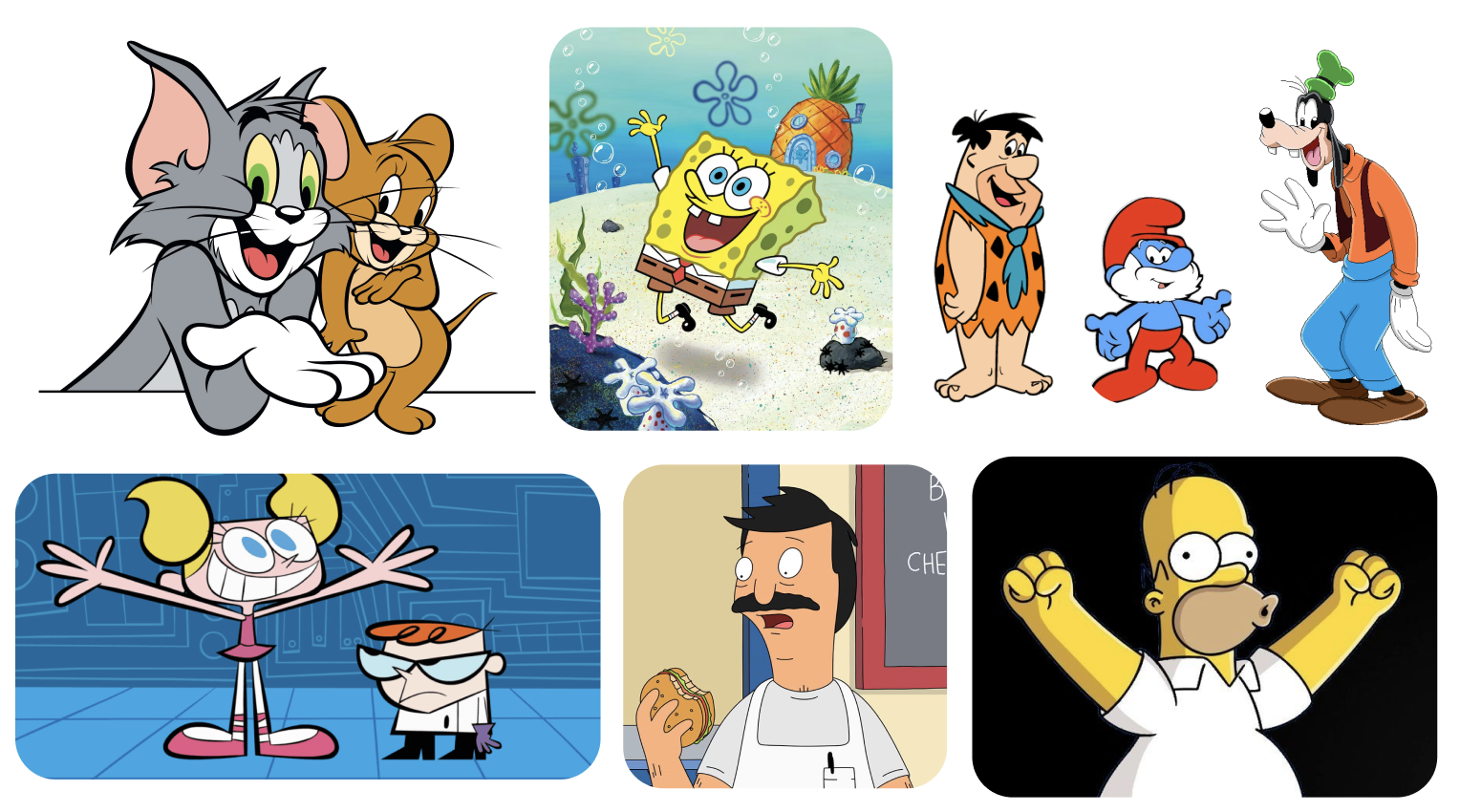
The reasons why cartoon characters have four fingers range from the practical to the psychological. Let's jump in:
Reason #1: Early cartoon styles made five fingers look weird.
Early animation characters like Felix the Cat (1919) and Mickey Mouse (1928) were drawn using a circle-based design to make them easy to draw. Even the characters' hands were circular, which made their fingers look quite plump.
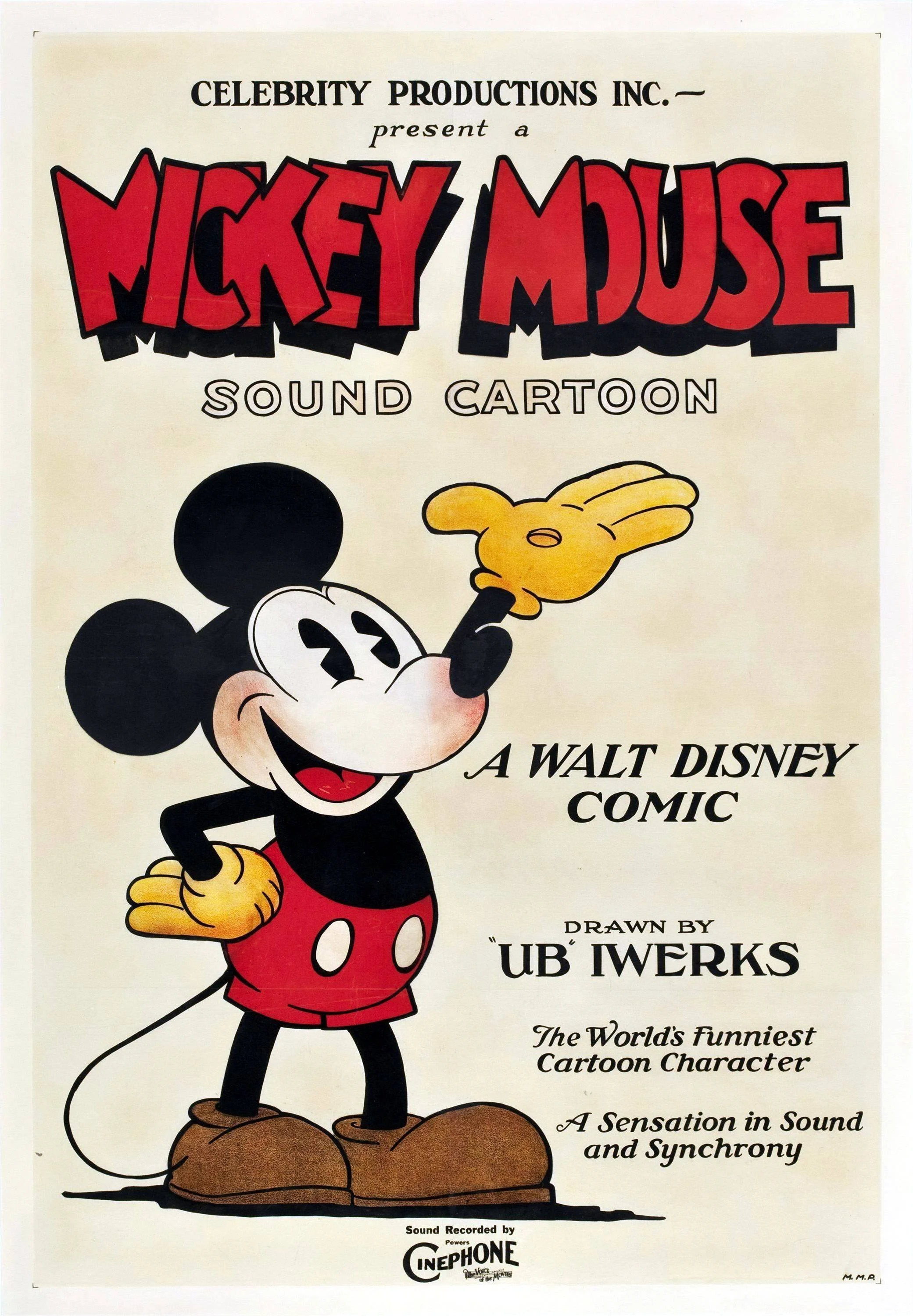
"Mickey Mouse Color Stock Poster (Celebrity Productions era, 1928)" by Ub Iwerks is part of the public domain.
Drawing five fingers could look cramped or awkward. When asked about the four-fingered Mickey Mouse, Walt Disney replied, "Artistically, five digits are too many for a mouse. His hand would look like a bunch of bananas."
Reason #2: Four fingers is faster and cheaper than five.
The most practical reason for drawing characters with four fingers is that it saved time and money in the animation process. Traditional animation was made up of dozens of hand-drawn frames for every second of footage. Methods that simplified the animators' process could potentially save a significant amount of time and money.

Walt Disney (standing left) and staff at Walt Disney Productions studio in 1932.
Source: Academy Museum of Motion Pictures
Disney even claimed that drawing four-fingered characters saved his studio millions of dollars: "Financially, not having an extra finger in each of 45,000 drawings that make up a six-and-one-half-minute short has saved the Studio millions."
Reason #3: Early cartoon characters were animals.
Felix the Cat, Mickey Mouse, Tom and Jerry, and plenty more early cartoon characters were anthropomorphized animals. And these animals also have something in common: They appear to only have four fingers on their front paws.
Cats and dogs have four digits and a carpal pad on their front paws, which helps them to run and jump. So to draw their cartoon characters with four fingers isn't that big of a stretch, anatomically-speaking.
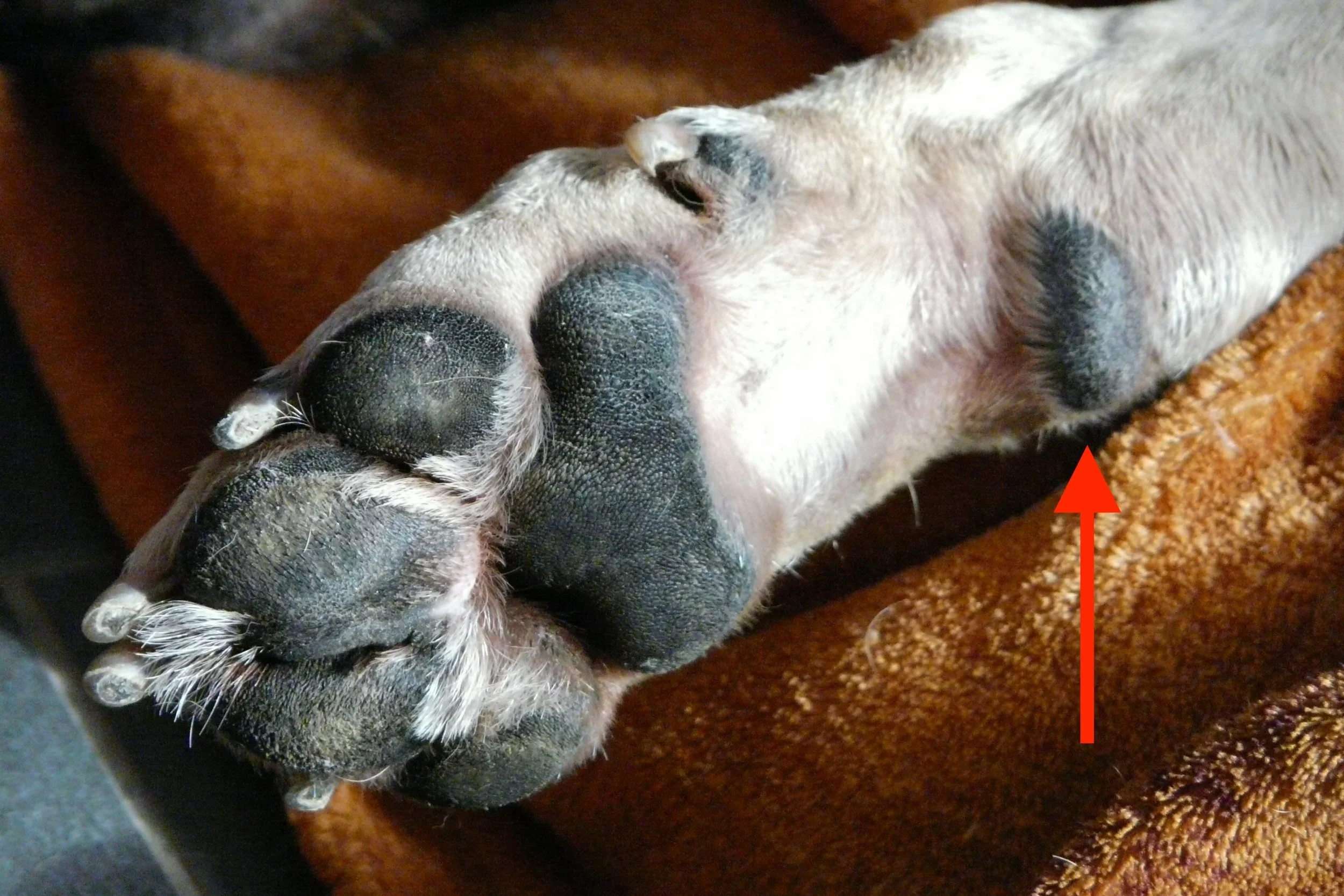
Mice also have four fingers on their front feet and five on their hind feet, so a four-fingered Mickey Mouse makes sense too.
Reason #4: Five fingers would look too human.
Finally, giving cartoon characters five fingers might be a little too human. There's a concept known as the uncanny valley which predicts that, as objects they look more like humans, they become more appealing to us — but only to an extent. If they begin to look too much like humans, we reject them as eerie or off-putting.

The number of fingers used in animation often relates to how human the character is supposed to feel. For example, the Teenage Mutant Ninja Turtles and aliens in Toy Story only have three fingers to emphasize their non-human-ness. Giving cartoon characters, especially animal ones, five fingers may come off as off-putting and "too human."
For all these reasons, four-fingered cartoon characters became a fairly standard practice around the world. But there is one major exception: Japan.
Why does Japanese anime almost always have five fingers?
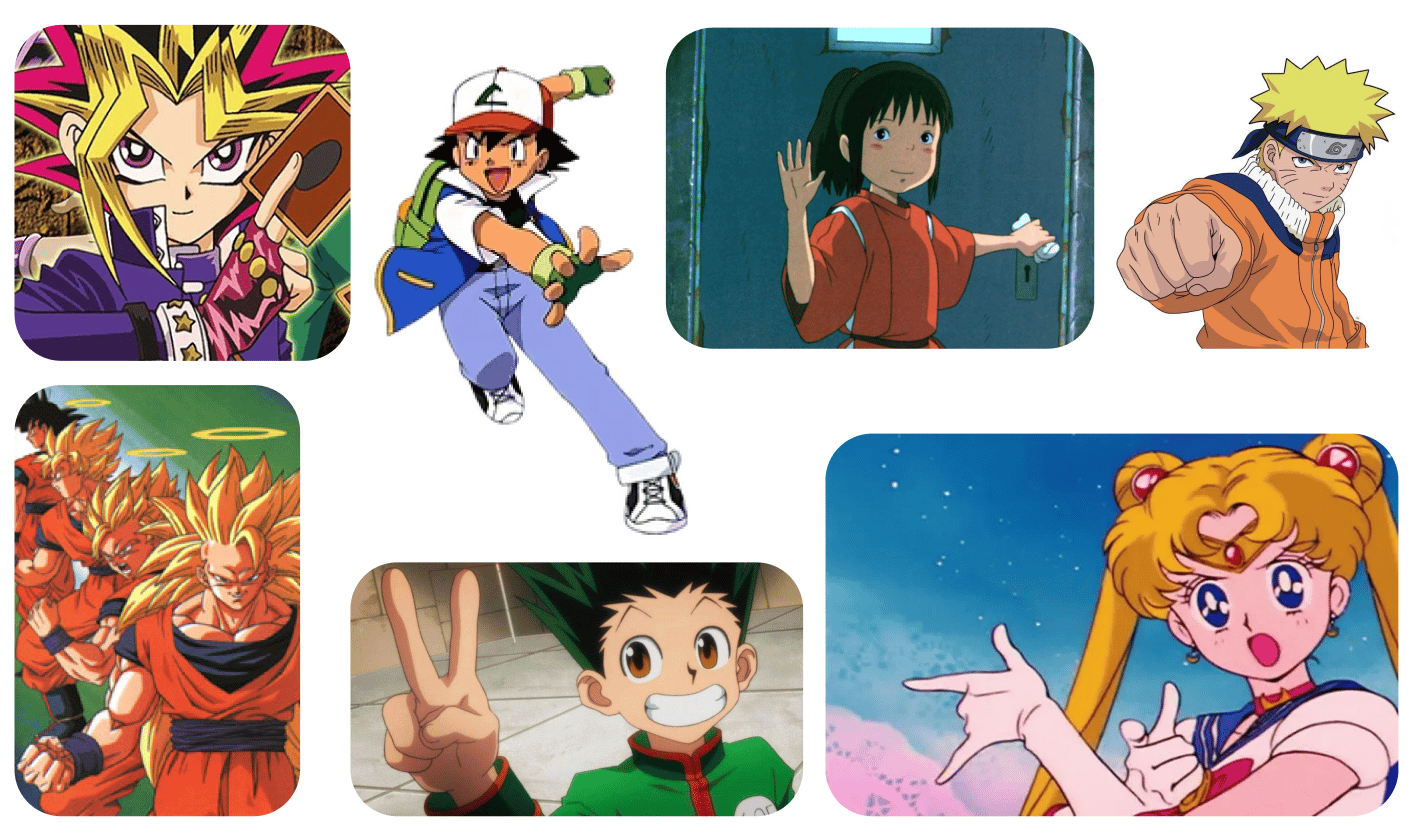
In Japanese animation, you'll rarely see a character without five fingers. One reason is because the number four is associated with death because the words for "four" (shi or, more commonly, yon 四) and "death" (shi 死) sound similar.
Four-fingered characters are also avoided because they resemble the Yakuza. Members of the Yakuza sometimes perform a ritual of finger-shortening as a punishment or test of loyalty. A 1993 survey found that nearly half of Yakuza members were missing fingers as a result of this practice.
The four-finger association with the Yakuza is a big reason why Japanese anime characters almost always have five fingers, even going as far as to extend this requirement to imported animation. In 2000, when the British cartoon Bob the Builder was set to premiere in Japan, Bob was altered to add an extra finger.

Lastly, four-fingered anime characters are avoided in Japan because it is considered an offensive reference to the Burakumin social caste. In Japan's feudal caste system, the Burakumin were outcasts historically associated with "unclean" professions like butchering or leather-working.
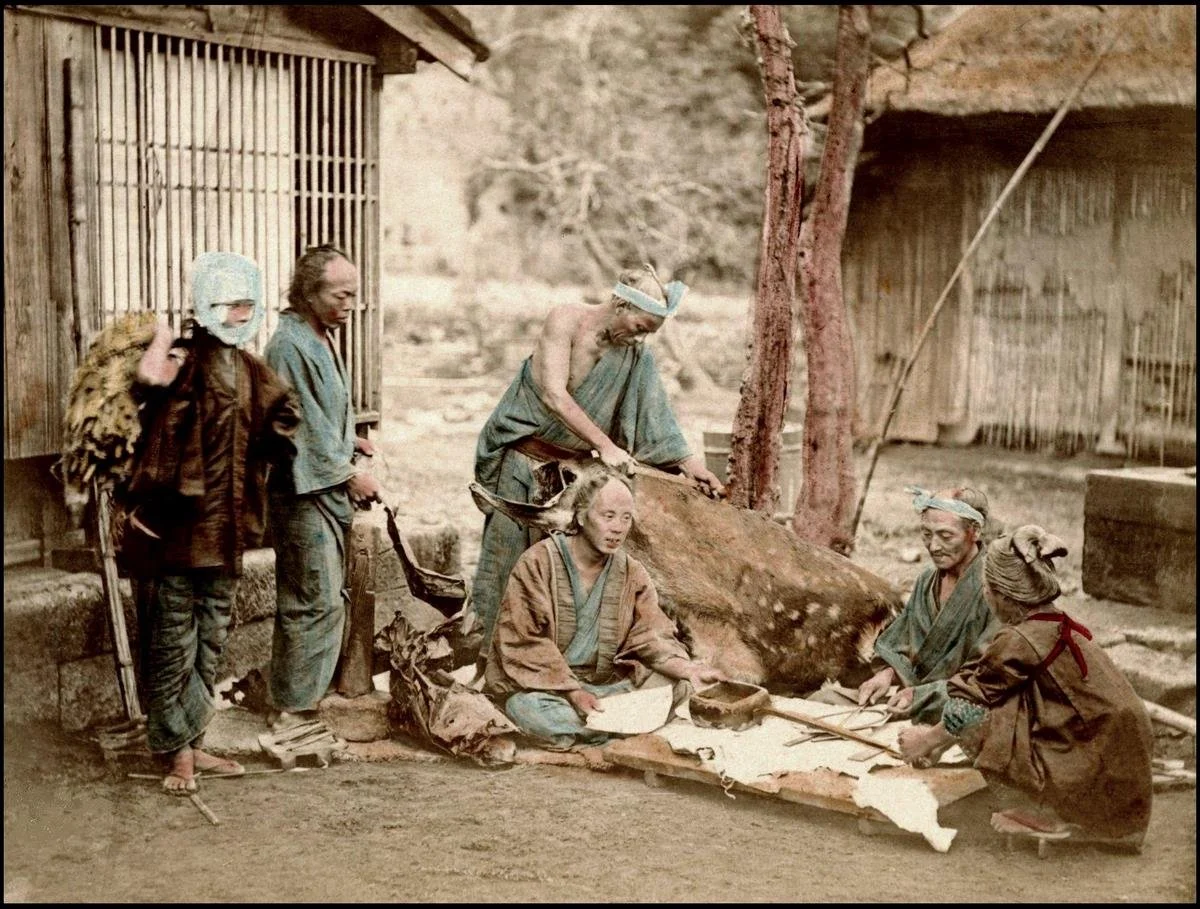
An 1873 staged photograph depicting Burakumin leather workers.
"Eta or Burakumin by Suzuki Shin'ichi I" by Suzuki Shin'ichi I is part of the public domain.
Laws and customs segregated and discriminated against the Burakumin for centuries. While the official caste system was abolished in 1871, social stigma against them continues to this day.
Flashing four fingers is an offensive gesture meant to reference the Burakumin because their ancestors often worked with four-legged creatures in their professions. In a 1973 TIME interview, a young person recalled, "Once a group of high school friends began discussing outcasts without realizing I was one. One boy held up four fingers, meaning the four legs of an animal; it's a symbol of dislike, fear and contempt. Imagine how I felt!"
Drawing anime characters with five fingers, therefore, avoids perpetuating this offensive gesture in Japanese pop culture.
Curious about how the world works?
Today You Should Know is a free, weekly email newsletter designed to help you learn something new every Friday.
Subscribe today 👇
Check out some other curious questions:



Sources
BBC. (2000, April 20). Bob the Builder fixed for Japan. BBC News. http://news.bbc.co.uk/2/hi/entertainment/720419.stm
ChannelFrederator. (2017, March 27). Why Do Cartoons Only Have Four Fingers? (Tooned Up S3 E16). YouTube. https://www.youtube.com/watch?v=0QZFQ3gbd6I
Lingualift. (2020, May 8). Lucky and unlucky numbers in Japan. Lingualift. https://www.lingualift.com/blog/lucky-unlucky-numbers-japan/
Minority Rights Group. (2018, April). Burakumin (Buraku people) in Japan. Minority Rights Group. https://minorityrights.org/communities/burakumin-buraku-people/
Singh, S., & McDougall, L. (2021). The Simpsons and their Mathematical Secrets. Bloomsbury Publishing. (p. 149)
Time Inc. (1973, January 8). JAPAN: The Invisible Race. Time. https://content.time.com/time/subscriber/article/0,33009,910511-2,00.html
Tyler, A. (2022, January 1). Why So Many Cartoon Characters Only Have 4 Fingers. ScreenRant. https://screenrant.com/cartoon-characters-four-fingers-hands-animation-reason/

.jpg)


We Americans sure do like American things.