
Why do we feel colder as we age?
The short answer
Aging causes your body to produce less heat, lose it more easily through thinner skin, and be slower to trigger warming responses, so we feel colder than we did when we were younger.
The long answer
Aging — if we're lucky — comes for us all. One day you're a reckless teenager wearing shorts in January, and then next you're making sure to pack a sweater for your 5:30pm dinner reservation in July.
One of the most noticeable changes we go through as we grow older is an increased sensitivity to the cold. As it turns out, there are multiple contributing factors. Let's dive right in.
Reason #1: We produce less heat as our metabolism slows down.
Metabolism is the process by which your body converts food into energy for fairly important tasks, such as breathing, circulating blood, and repairing cells. All this energy creates a lot of heat, which makes us feel warmer.

Chart showing total energy expenditure (TEE) rate spiking in early childhood and declining from adult levels (~100%) starting around age 60. Source: Science
But after the age of 60, our metabolism slows by roughly 0.7% each year. This change happens for a few reasons:
Hormonal changes: In menopausal women, estrogen and progesterone decline, which can slow resting metabolism by around 5%. Men also experience a drop in testosterone, which can lead to reduced muscle mass and subsequent drop in metabolic rate.
Reduced physical activity: If you move less in old age, you burn fewer calories. And because using energy produces heat, lower activity levels can mean the body generates less warmth overall.
Loss of muscle mass: As we age, muscle mass decreases by about 3–8% per decade after age 30, speeding up after age 60. Less muscle means the body burns fewer calories at rest.
A slower metabolism means less energy being used inside the body, which means we create less heat and feel colder.
Reason #2: We lose insulation as our skin gets thinner.
But we also tend to feel colder as we age because we are losing more heat due to changes in our skin. Skin has three layers: epidermis (outer layer), dermis (middle layer), and hypodermis (deeper fatty layer).
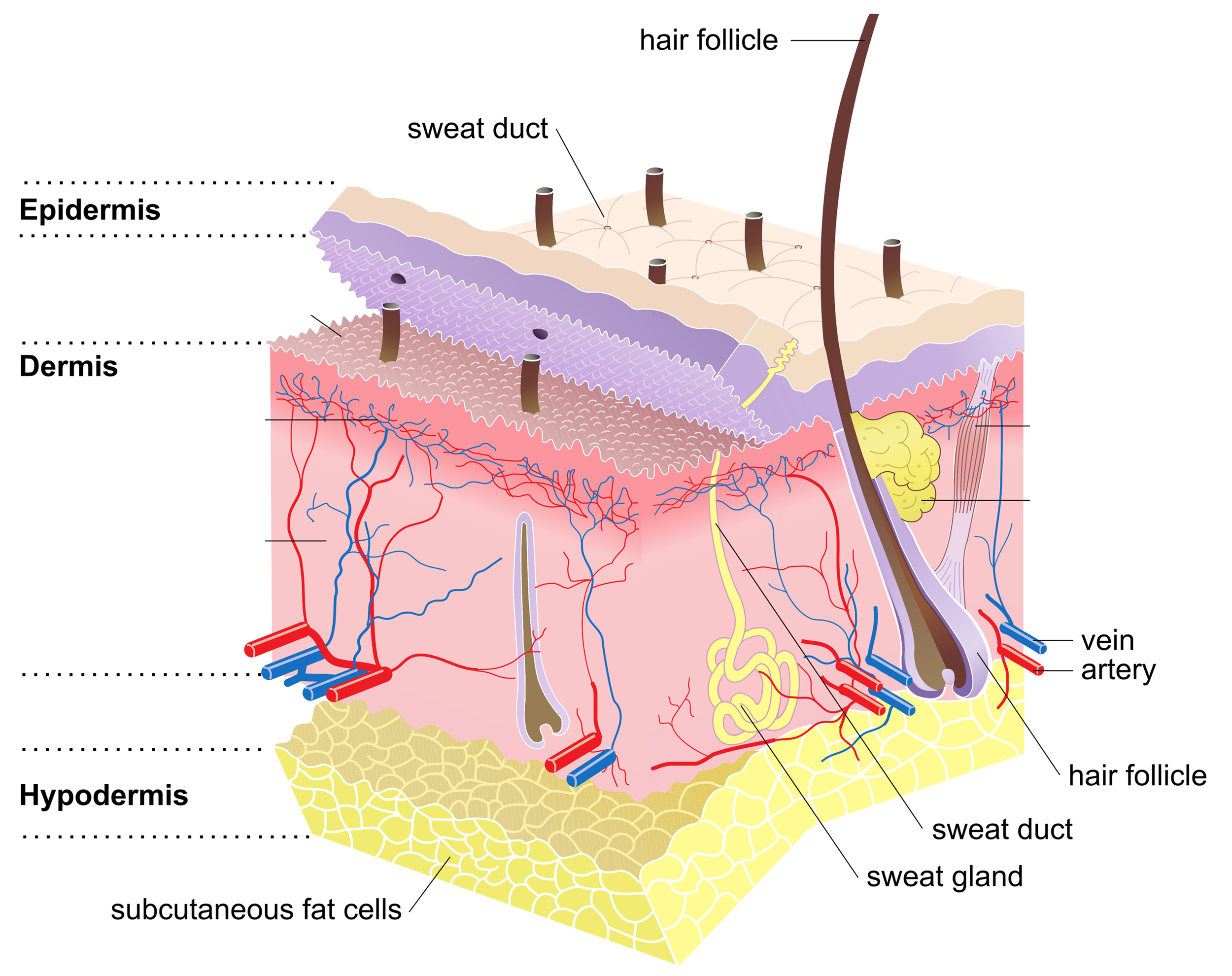
"Structure of mammalian skin and the layers typically present in parchment" (modified) by Sean P Doherty is licensed under CC BY-SA 4.0.
As we age, the epidermis and hypodermis get thinner for a few reasons, one of which is aging-related senescence.
Our skin is constantly renewing itself due to the damage caused by UV light, inflammation, pollution, and more. But over time, our cells hit the brakes in a process known as senescence. The cells stay alive, but they stop dividing in order to prevent damaged cells from becoming cancerous. As more skin cells lose their ability to divide, the production of new cells slows down. Over time, this can contribute to a thinner epidermis and hypodermis.
Thinner skin in the epidermis and fewer fat cells in the hypodermis can make it easier for body heat to escape, which is another reason older adults may feel colder.
Reason #3: We become less efficient at controlling blood flow.
One of the ways our body controls our temperature is with vasoconstriction and vasodilation. When we're cold, the body conserves heat by constricting blood vessels near the surface of the skin. In vasoconstriction, the blood (and warmth) is conserved near vital organs, which causes our hands and feet to feel colder.
Conversely, vasodilation is when blood vessels expand when you're hot to release more warmth. This is why your skin is red and warm when you're feeling overheated.
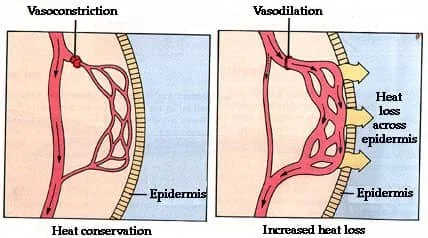
Source: PhysioWeb
But as we age, this temperature-adjusting system becomes less responsive. Studies have found that blood vessels in older adults do not narrow as strongly when needed to conserve heat. This allows more heat to escape and makes it harder to maintain body temperature.
At the same time, vasoconstriction still happens in older age. And because older bodies often produce less heat and have less insulation, they may narrow blood vessels near the skin more often to protect core temperature. This causes hands and feet to feel colder because less warm blood is reaching them.
Reason #4: Our brain becomes less sensitive to temperature changes.
Our brain's hypothalamus is responsible for monitoring sensory input, like cold temperature, and triggering appropriate responses, like shivering to generate warmth.
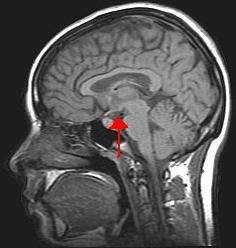
Location of the hypothalamus. "Hypothalamus" is part of the public domain.
As we age, the hypothalamus becomes less sensitive and may not react as quickly to changes in temperature. This can lead to unnecessary heat loss before our brain flips on warming responses.
Reason #5: Other medical conditions may be affecting body temperature.
Age is also a risk factor for many medical conditions that can affect how warm we feel.
Cardiovascular disease: If our blood can't circulate normally, we may not be able to retain heat as well.
Anemia: When there aren't enough red blood cells to carry oxygen efficiently, the body prioritizes blood flow to vital organs and pulls it away from the skin.
Hypothyroidism: An underactive thyroid slows the production of thyroid hormones, which can lower your metabolic rate and make you feel colder.
Type 2 diabetes: High blood sugar can damage nerves and make our arms and feet feel cold, numb, or tingly. And low blood sugar can cause chills or a general sense of feeling cold.
If your sensitivity to cold suddenly changes, it might be a sign of an underlying condition and that you should talk to a doctor.
Reason #6: Medications may be affecting body temperature.
With an increased risk of many medical conditions, older adults also are more likely to be prescribed medications, some of which can affect body temperature. For example, beta blockers used to lower blood pressure can reduce blood circulation and cause cold hands and feet. Sedatives and strong pain medications can also affect your cold tolerance.
Curious about how the world works?
Today You Should Know is a free, weekly email newsletter designed to help you learn something new every Friday.
Subscribe today 👇
Check out some other curious questions:
Sources
Brodkey, F., Dugdale, D., & Conaway, B. (2024, July 15). Aging changes in skin. MedlinePlus. https://medlineplus.gov/ency/article/004014.htm
Greaney, J. L., Alexander, L. M., & Kenney, W. L. (2015). Sympathetic control of reflex cutaneous vasoconstriction in human aging. Journal of Applied Physiology, 119(7), 771–782. https://doi.org/10.1152/japplphysiol.00527.2015 https://pmc.ncbi.nlm.nih.gov/articles/PMC4593810/
Liu, M., Lu, F., & Feng, J. (2024). Aging and homeostasis of the hypodermis in the age-related deterioration of skin function. Cell Death & Disease, 15(6). https://doi.org/10.1038/s41419-024-06818-z https://www.nature.com/articles/s41419-024-06818-z
Nan, L., Guo, P., Hui, W., Xia, F., & Yi, C. (2025). Recent advances in dermal fibroblast senescence and skin aging: Unraveling mechanisms and pioneering therapeutic strategies. Frontiers in Pharmacology, 16. https://doi.org/10.3389/fphar.2025.1592596 https://www.frontiersin.org/journals/pharmacology/articles/10.3389/fphar.2025.1592596/full
Providence. (2025, November 14). Feeling colder as you get older? Here are some reasons why. Providence. https://blog.providence.org/elderly-care/feeling-colder-as-you-get-older-here-are-some-reasons-why
Raleigh-OBGYN. (2026, April 15). How Hormones Impact Your Metabolism: What Every Woman Should Know. Raleigh-OBGYN. https://www.raleighob.com/how-hormones-impact-your-metabolism/
Ratini, M. (2026, April 5). How Much Does Your Metabolism Slow Down as You Age?. WebMD. https://www.webmd.com/healthy-aging/how-much-does-your-metabolism-slow-down-as-you-age
Shiffer, E., & Koenck, S. (2024, December 9). Does metabolism actually slow down with age?. Lingo. https://www.hellolingo.com/blog/metabolism-and-age
UCLA Health. (2026, March 23). Feeling colder as you get older? Why it happens and what to do. UCLA Health. https://www.uclahealth.org/news/article/feeling-colder-you-get-older-why-it-happens-and-what-do-2



We Americans sure do like American things.