
Why did the Tour de France start?
The short answer
The Tour de France grew out of the Dreyfus affair, a scandal over the wrongful treason conviction of a Jewish French army officer. The scandal divided France so deeply that anti-Dreyfus advertisers left the pro-Dreyfus sports paper Le Vélo to start a rival, L’Auto. To boost circulation, L’Auto launched the Tour de France in 1903.
The long answer
A technically correct answer to this question is that (spoiler alert) a struggling newspaper organized the Tour de France to boost sales. But there is so much more to this story (intrigue alert). Have you heard of the Dreyfus affair?
What was the Dreyfus affair?
In 1894, a Jewish officer in the French army named Alfred Dreyfus was found guilty of passing military secrets to Germany and sentenced to life in prison. But Dreyfus and his family ardently maintained his innocence.
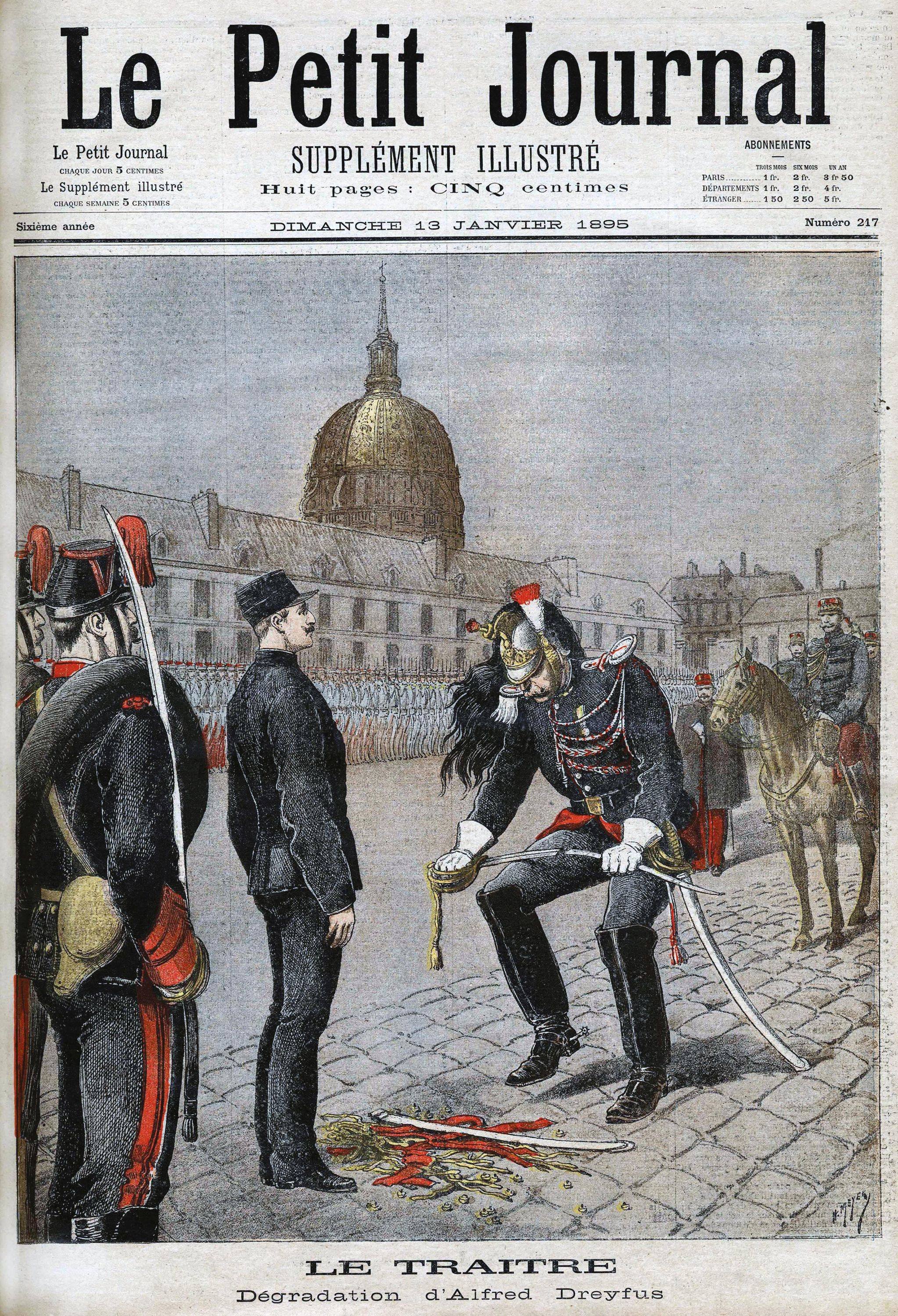
"Dégradation d'Alfred Dreyfus - Le Petit Journal (janvier 1895)" by Henri Meyer is licensed under the public domain.
After a tumultuous decade of legal battles, Dreyfus was found to have been framed by another officer with the military involved in a cover-up. Dreyfus was eventually exonerated in 1906. Fun fact: The French army did not publicly acknowledge his innocence until 1995.
In the time between Dreyfus' conviction and exoneration, the question of his innocence became an intensely divisive political issue in France.
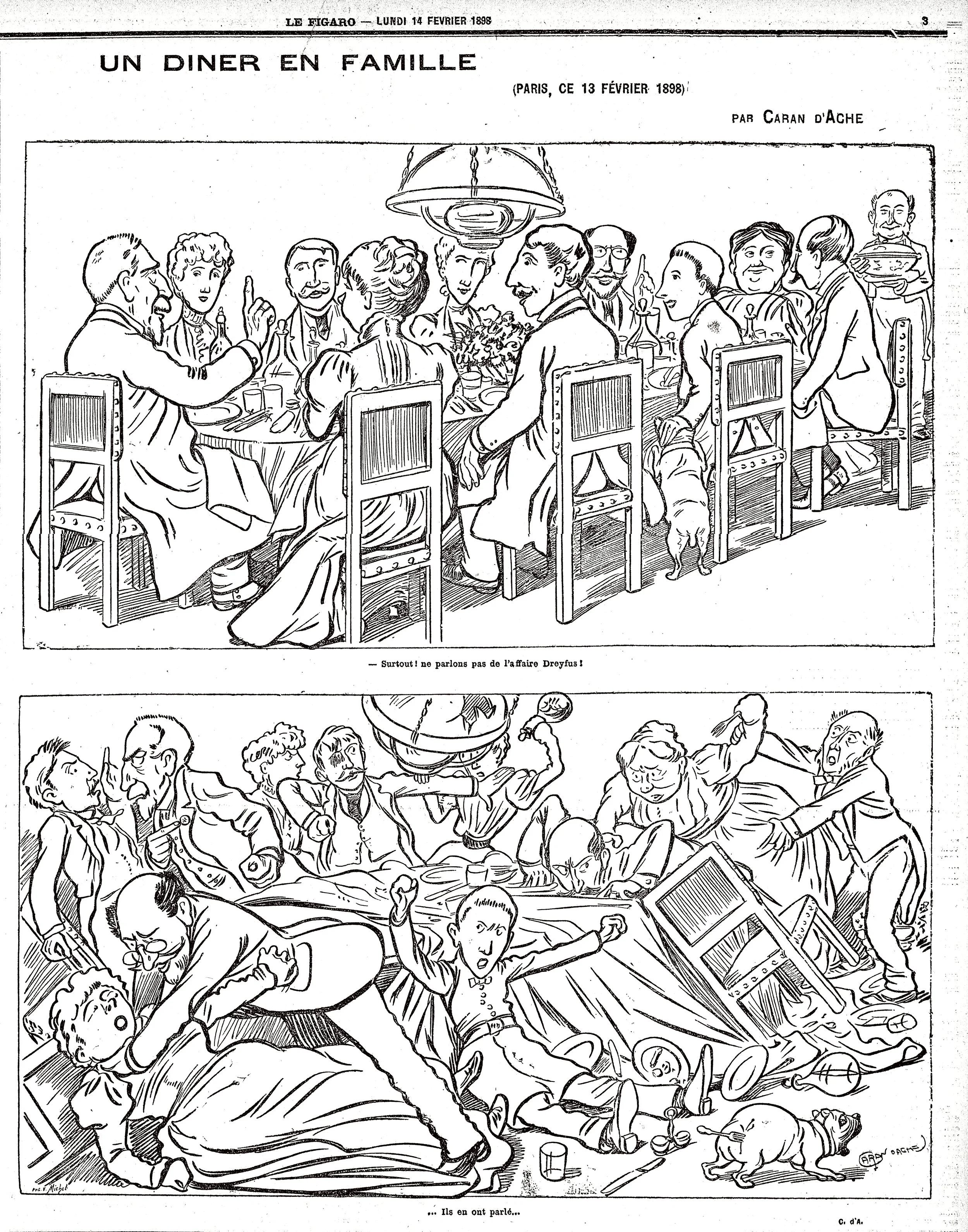
Comic from February 14, 1898 that depicts the divisions in French society during the Dreyfus Affair. At the top, somebody says "Above all, let us not discuss the Dreyfus Affair!". At the bottom, the caption says "They have discussed it".
"Un Diner en Famille" by Caran d'Ache is part of the public domain.
Those who believed in Dreyfus' innocence were called "Dreyfusards." They were opposed by the "anti-Dreyfusard" coalition of anti-Semitic nationalists, monarchists, and the Catholic right. This faction wasn't necessarily wholly convinced of Dreyfus' guilt but felt defending the army's reputation mattered more than one man's innocence.
The Dreyfus affair divided French society. Disagreements between Dreyfusards and anti-Dreyfusards broke up families, political parties, and ... sports newspapers.
What does the Dreyfus affair have to do with the Tour de France?
At the turn of the 20th century, France's top sports newspaper, Le Vélo,enjoyed a virtual monopoly, circulating 80,000 copies daily.
Le Vélo's editor-in-chief, Pierre Giffard, believed Dreyfus was innocent and repeatedly expressed these views in the paper's political commentary, despite the paper's advertisers being anti-Dreyfusards.
So in 1900, automobile manufacturer Albert de Dion rallied up other anti-Dreyfusard sponsors (including a Michelin brother) and part of Le Vélo's editorial staff to break away and start a rival, politically neutral newspaper named L'Auto-Vélo.
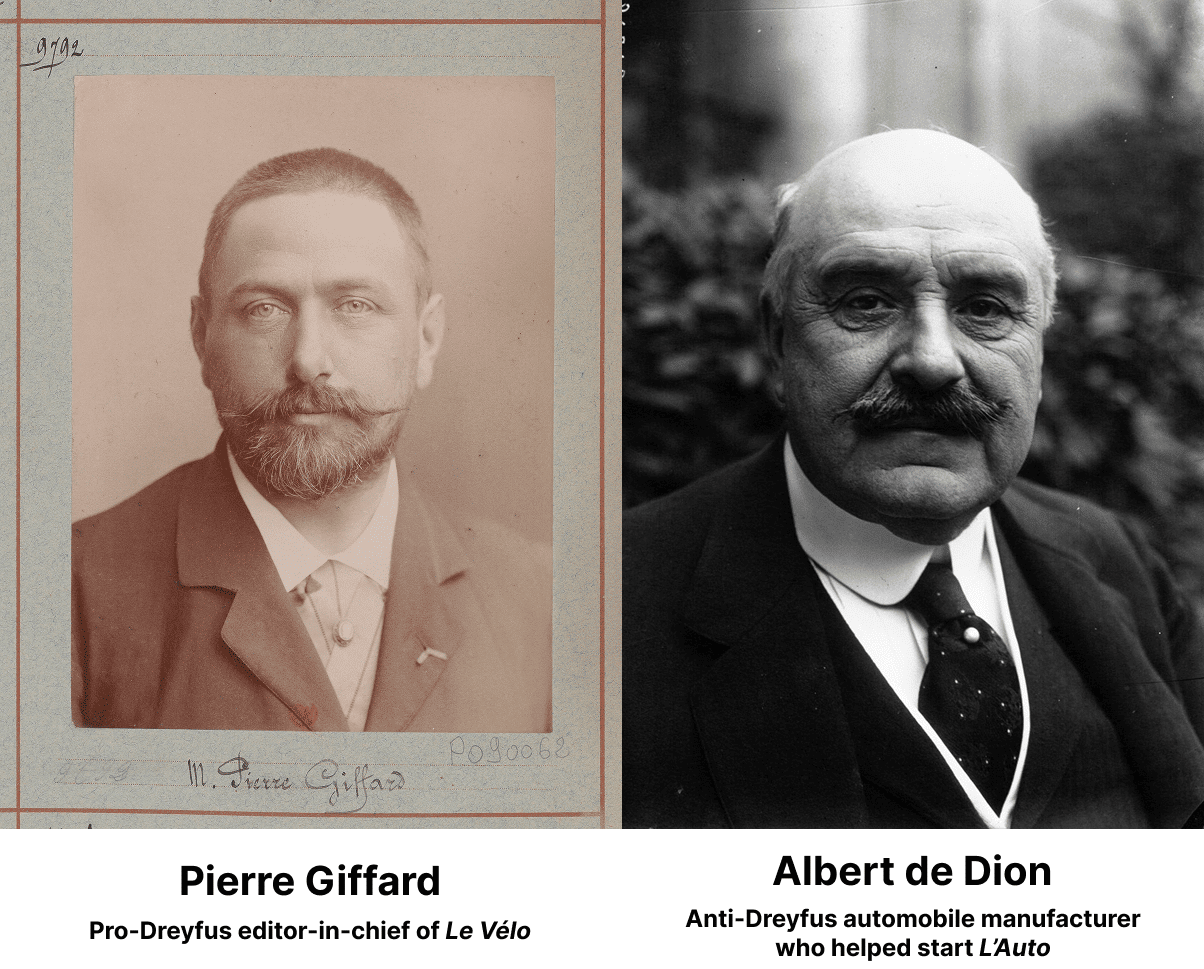
Left: "M. Pierre Giffard" by Atelier Nadar. Right: "Jules-Albert de Dion en 1936" by La Revue commerciale automobile.
If you think Le Vélo and L'Auto-Vélo sound awfully similar, you're in good company. Le Vélo editor Giffard sued his rival for trademark infringement and won the case in 1903, which forced L'Auto-Vélo to change its name to L'Auto. Not a great name for a cycling newspaper.
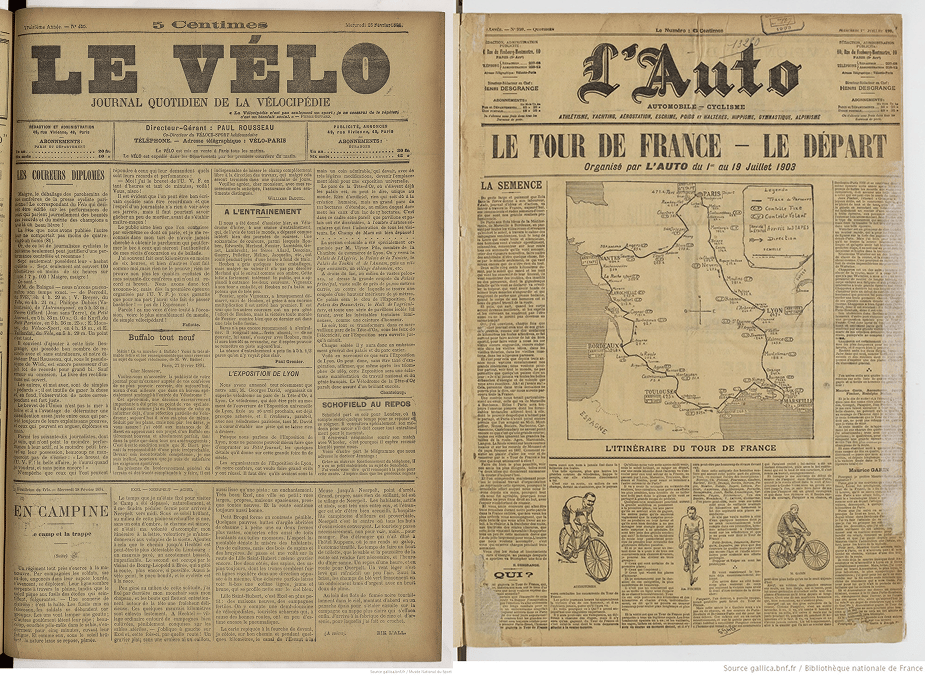
Left: "Le Vélo journal quotidien 28.02.1894" by Kasskass is licensed under CC BY-SA 4.0. Right source: Bibliothèque nationale de France
Even before the name change, L'Auto was struggling to compete with the powerhouse Le Vélo. Editor Henri Desgrange feared that a name change would cause the paper to fold altogether. Not to disrespect this French story with an American sports idiom, but Desgrange needed a Hail Mary.
The winning idea came from a young employee, Géo Lefèvre, who suggested L'Auto organize a multi-day bicycle race across the entire country. The idea of organizing an event to boost circulation was not unique (the famous Paris–Roubaix race was started by Le Vélo in 1896), but the scale would be novel.
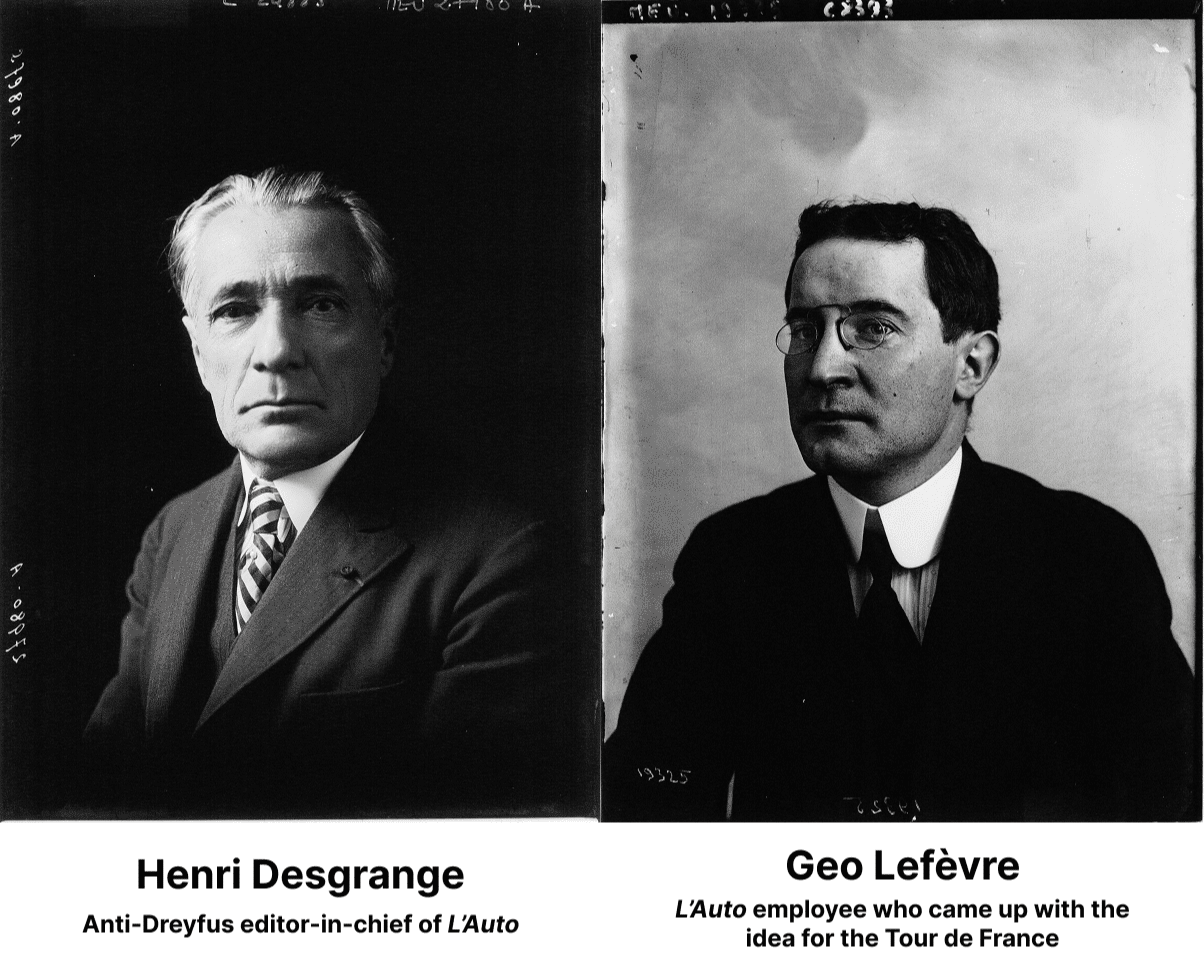
Left: "Géo. Lefèvre de l'"Auto"" by Agence de presse Meurisse. Right: "M. Henri Desgranges, Directeur de l'"Auto"" by Agence de presse Meurisse.
The Tour de France was announced on January 19, 1903 as a test of superhuman strength and endurance, spanning 2,428 kilometers (more than 1,508 miles) in six stages over 20 days.
As we know with today's outlandish YouTube thumbnails, extreme spectacles grab people's attention. The first Tour de France was no exception. L'Auto increased its circulation six-fold during the race, and its success caused the pro-Dreyfus Le Vélo to shut down a year later.
What was the first Tour de France like?
The Tour de France is and always has been a sufferfest, but it looked a bit different in 1903. In some ways, it was easier (the French Alps climbs weren't introduced until 1911). But the race was definitely more brutal and dangerous than it is today.
The first Tour de France's riders that competed for the 20,000 francs of prize money were a mix of professional and hobbyist cyclists. They rode without helmets, often through the night on rough, unpaved roads, and were forbidden to draft behind other riders or vehicles.
The riders were also forbidden to receive any support, so they often rode with spare tubes and tires wrapped around their torsos in case of flats.
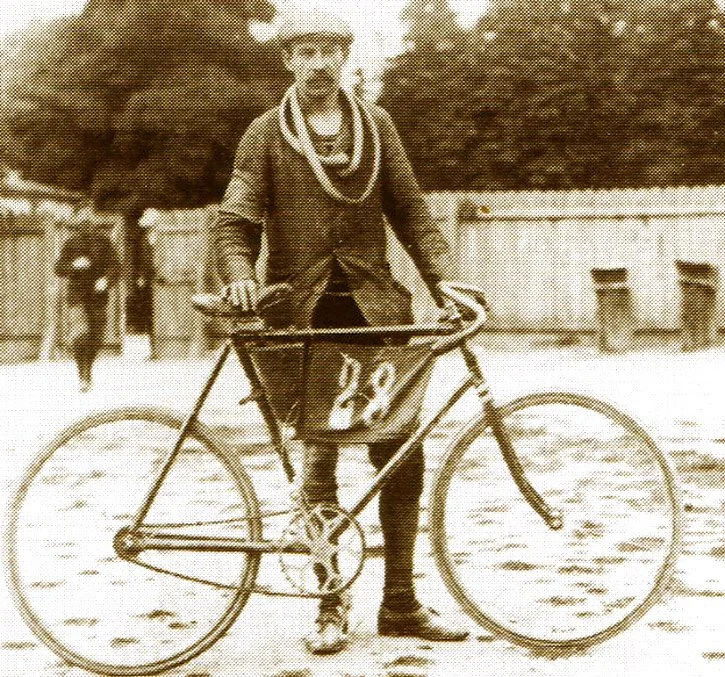
"Julien Lootens" is part of the public domain.
The stages in the 1903 race were also considerably longer than today's stages. For example, the first stage from Paris to Lyon stretched 467 kilometers (~290 miles). Compare that to the longest stage in the 2026 Tour de France: a paltry 205.8 km (~128 miles). It took the winner of the first stage, Maurice Garin, over 17 hours to complete the section and astonishingly he only won by one minute.
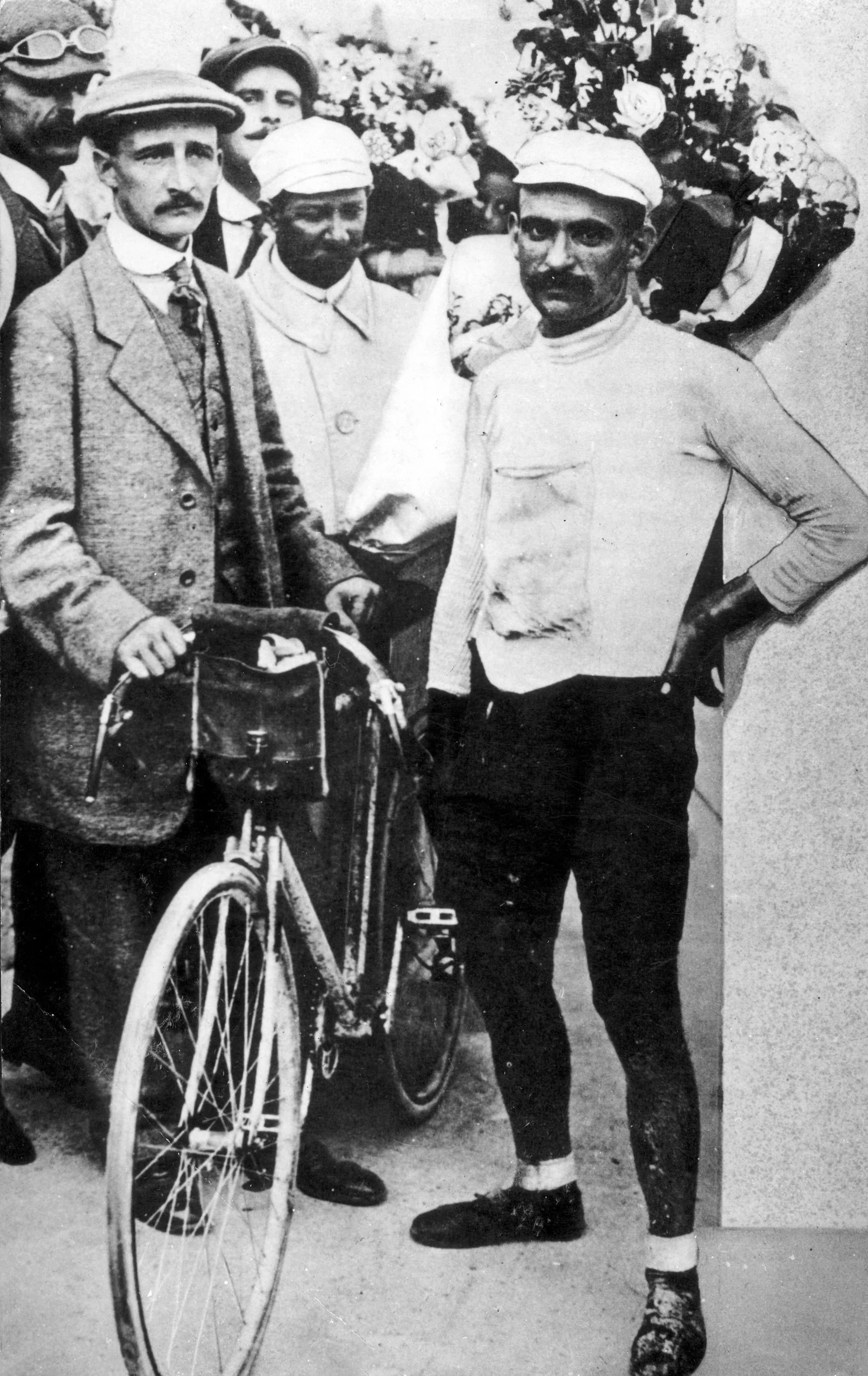
Maurice Garin, the winner of the first Tour de France.
"Wielrennen, Tour de France 1903, Geschiedenis" is part of the public domain.
Garin, a former chimney sweep, would go on to win the first Tour de France while getting cheered on by a crowd of 20,000 spectators. In total, Garin spent more than 94 hours riding and averaged ~24 km/h (15 mph). Out of the 60 riders that started with Garin, only 20 ended up completing the brutal race.
Curious about how the world works?
Today You Should Know is a free, weekly email newsletter designed to help you learn something new every Friday.
Subscribe today 👇
Check out some other curious questions:
Sources
Amaury Sport Organisation. (2026). Official route of Tour de France 2026. Tour de France. https://www.letour.fr/en/overall-route
Cavendish, R. (2003, July 3). Finish of the First Tour de France. History Today. https://www.historytoday.com/archive/finish-first-tour-de-france
Dobkin, A. (2021, July 16). How a Small French Newspaper Began the Tour de France. Literary Hub. https://lithub.com/how-a-small-french-newspaper-began-the-tour-de-france/
Dugdale, B. (2008, December 10). The Tour de France and the Dreyfus Affair. The Chain Gang. https://thechaingang.co.uk/news/the-tour-de-france-and-the-dreyfus-affair/
Encyclopaedia Britannica. (2026, May 15). Dreyfus affair. Britannica. https://www.britannica.com/event/Dreyfus-affair
Irvine, M., & Koch, J. (2023). First Tour de France. EBSCO. https://www.ebsco.com/research-starters/sports-and-leisure/first-tour-de-france
Klein, C. (2013, June 28). The Birth of the Tour de France. History.com. https://www.history.com/articles/the-birth-of-the-tour-de-france
Leavitt, D. (2016, February 22). What Was the Dreyfus Affair?. Antiques Roadshow. https://www.pbs.org/wgbh/roadshow/articles/what-was-the-dreyfus-affair/
WAS Popular History. (2020). The History of the Tour de France. From Scandals to Doping and Killer Trails | WAS. Retrieved from https://www.youtube.com/watch?v=njJsy0o8-Ao.

.jpg)


We Americans sure do like American things.