
Why does the mouth heal so fast?
The short answer
The mouth heals quickly because oral tissue is already primed for repair, has a calmer immune response that reduces scarring, and stays bathed in saliva full of wound-healing molecules.
The long answer
One day, 30 people woke up and decided to get hurt ... in the name of science. So they walked into the U.S. National Institutes of Health and received two tiny biopsies in the inner cheeks and skin below the armpit.
Remarkably, all of the volunteers agreed to return for observation. While the mouth cuts healed in just a few days, the skin wounds were still lingering two weeks later.
You can see the difference in the image below. (I've made the image a "Click to reveal" for my squeamish friends.)
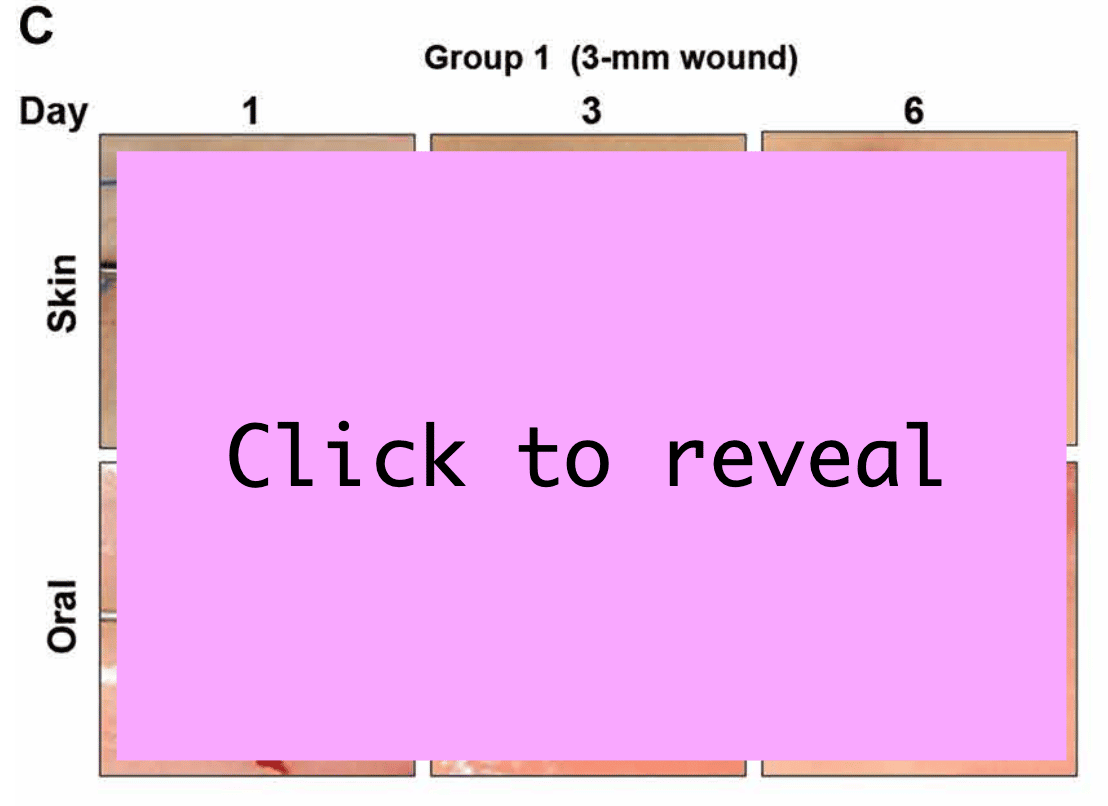
Arm wounds (top) remained open for more than six days; mouth wounds (bottom) closed quickly and without scarring.
Source: Science Translational Medicine
We've long known that oral tissue heals a lot faster than skin tissue. Accidentally biting your cheek hurts a lot initially, but the next day you can't even remember you hurt yourself.
Perhaps it's not surprising why your mouth heals so much faster than the rest of your body. If you get a cut on your arm, you can wait for it to heal. But if you wound the inside of your mouth, you risk not being able to eat. And as you likely know, we need to eat food to live.
So how does the mouth heal so quickly and without scarring? Let's chew on it:
Reason #1: Oral tissue is primed to repair itself.
A gene regulator is a protein that acts like a switch, instructing cells to perform different tasks, including healing. Oral tissue is unique in that its gene regulators are already standby to heal, unlike skin tissue where gene regulators need to "flip a switch" before the healing process can begin.
In oral tissue samples, gene regulators associated with repair, notably SOX2, are switched on before any injury ever occurs. This means the healing process can begin almost immediately after a cut or wound, with little to no ramp-up time.
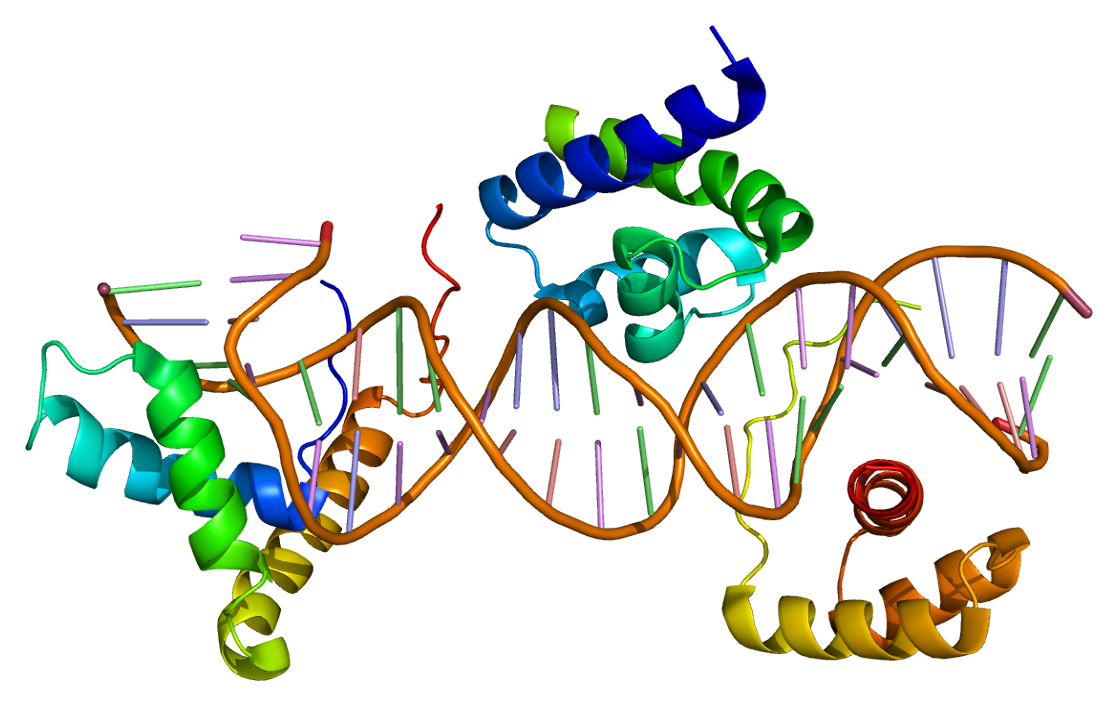
The gene regulator protein SOX2.
"Protein SOX2 PDB 1gt0" by Emw is licensed under CC BY-SA 3.0.
This always-on healing strategy is very effective. In a 2018 study, researchers boosted the SOX2 levels in mouse skin and found that wounds that typically took nine days to heal closed in just three days. At a molecular level, oral tissue seems to be primed for healing before an injury even happens.
Oral tissue also has another advantage for healing: the mouth is biologically "younger."
Every time a cell divides, telomeres, the protective caps at the ends of chromosomes, get a little shorter. Eventually the telomeres become so short that the cell can no longer safely divide, so it enters a dormant state called senescence. This fundamental limit on cell division is known as the Hayflick Limit.
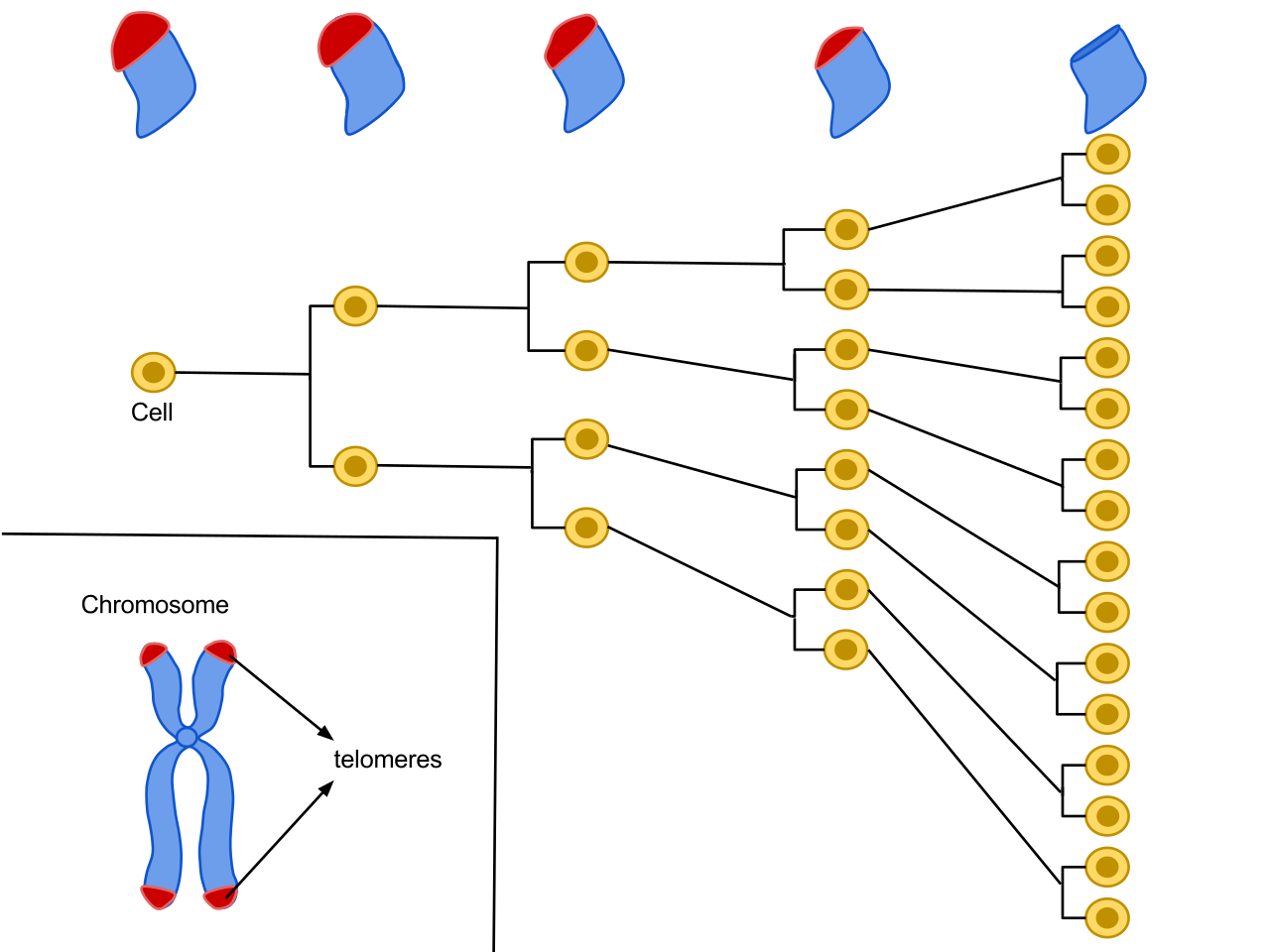
A diagram showing the Hayflick Limit of cell division. Eventually the telomeres become so short that they no longer protect the chromosome ends properly. The average cell will divide between 50-70 times before cell death.
"Hayflick Limit" by Azmistowski17 is licensed under CC BY-SA 4.0.
The stem cells found in oral tissue are remarkably resistant to this process. They can divide far more times before hitting that limit, behaving more like fetal stem cells than typical adult ones. This youthful resilience may help oral tissue replace cells quickly and heal with minimal scarring.
Reason #2: The immune response in your mouth is less likely to overreact with inflammation.
When you get a cut on your skin, your body floods the injury site with white blood cells. This aggressive inflammatory response is part of what leads to scarring. Since your skin is your first line of defense against the outside world, your body essentially "decides" it's better to scar than risk infection.
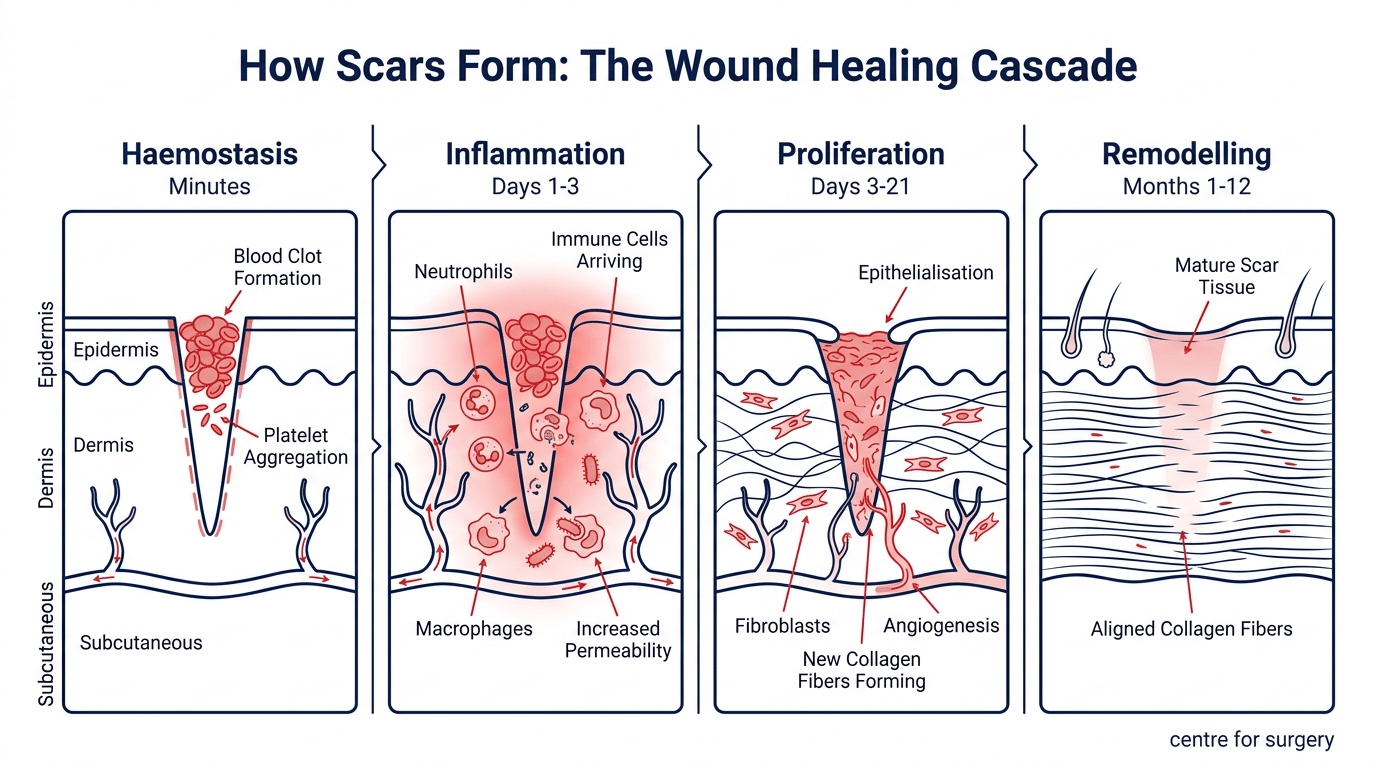
Diagram showing how scars form.
Source: Centre for Surgery
The immune response to wounds in your mouth is much calmer and less inflammatory. The reason inflammation is less intense in the mouth is that the chemical "distress signals" are much quieter.
Cytokines are messengers that tell the immune system how to react. They recruit neutrophils to kill bacteria, macrophages to eat dead cells, and T-cells to coordinate the long-term response to injury. In oral wounds, these inflammatory immune cells are found in significantly lower numbers than in skin wounds, which makes scarring less common.
Oral wounds also differ how they handle angiogenesis, the process in which new blood vessels form to supply oxygen and other nutrients to a wound site. Skin wounds trigger an aggressive burst of vessel growth, but most of these are poorly formed. Oral wounds produce fewer new vessels, but the ones that do form mature more quickly and provide better oxygenation. It turns out that when it comes to blood vessel growth, quality matters more than quantity.
Reason #3: Saliva creates a healing environment.
At this point, you might be wondering how oral wounds can heal without the aggressive immune response that skin wounds go through.
The secret sauce? Saliva.
Saliva has two benefits when it comes to healing. First, it's moist which helps the inflammatory cells that do show up stay alive. Second, saliva contains a cocktail of proteins that help with wound healing.
These proteins include:
Growth factors: Saliva has proteins like Epidermal Growth Factor which helps new cells grow and spread across a wound.
Tissue factor: This protein dramatically speed up how fast blood clots seal a wound.
Histatins: These unique proteins help drive cell migration, the process by which cells physically crawl toward each other to close a wound.
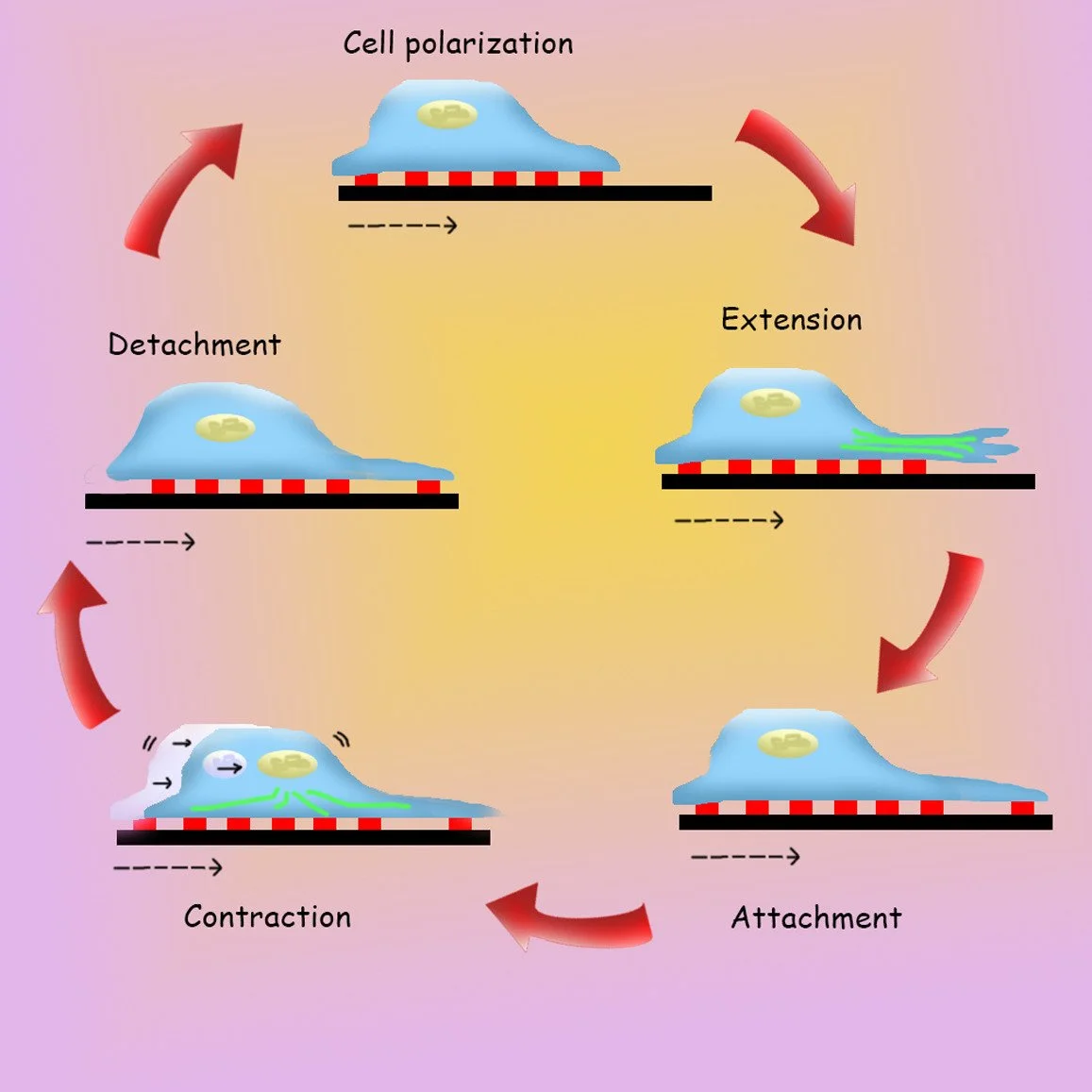
A diagram showing the steps involved in cell migration. I personally adore it when Comic Sans makes its way onto the figures of published scientific papers.
Source: Oral Diseases
In short, the mouth is excellent at healing because it is a biologically young, calm, and wet place. ⬅️ And that is a sentence I never would have dreamt of writing in a thousand years.
Curious about how the world works?
Today You Should Know is a free, weekly email newsletter designed to help you learn something new every Friday.
Subscribe today 👇
Check out some other curious questions:


Sources
Chadwick, L. (2026, May 30). Telomere. National Human Genome Research Institute. https://www.genome.gov/genetics-glossary/Telomere
Healey, N. (2021, October 27). The mouth’s curative superpowers. Nature News. https://www.nature.com/articles/d41586-021-02923-7
Hesman Saey, T. (2019, August 8). Here’s why wounds heal faster in the mouth than in other skin. Science News. https://www.sciencenews.org/article/why-wounds-heal-faster-mouth-other-skin
Iglesias-Bartolome, R., Uchiyama, A., Molinolo, A. A., Abusleme, L., Brooks, S. R., Callejas-Valera, J. L., Edwards, D., Doci, C., Asselin-Labat, M.-L., Onaitis, M. W., Moutsopoulos, N. M., Silvio Gutkind, J., & Morasso, M. I. (2018). Transcriptional signature primes human oral mucosa for rapid wound healing. Science Translational Medicine, 10(451). https://doi.org/10.1126/scitranslmed.aap8798
Szpaderska, A. M., Zuckerman, J. D., & DiPietro, L. A. (2003). Differential injury responses in oral mucosal and cutaneous wounds. Journal of Dental Research, 82(8), 621–626. https://doi.org/10.1177/154405910308200810
Torres, P., Castro, M., Reyes, M., & Torres, V. (2018). Histatins, wound healing, and cell migration. Oral Diseases, 24(7), 1150–1160. https://doi.org/10.1111/odi.12816
Waasdorp, M., Krom, B. P., Bikker, F. J., van Zuijlen, P. P., Niessen, F. B., & Gibbs, S. (2021). The bigger picture: Why oral mucosa heals better than skin. Biomolecules, 11(8), 1165. https://doi.org/10.3390/biom11081165


.svg)
We Americans sure do like American things.