
The short answer
Caffeine narrows the blood vessels in your brain, and your body adapts to that over time. When you stop, those vessels widen more than usual and likely put pressure on nearby nerves, which is what causes the headache.
The long answer
Caffeine. It's the most widely used neurostimulant in the world, energizing billions of people daily through coffee, tea, and energy drinks.
As I sip my morning instant coffee, you could also say it's the most widely used neurostimulant powering this very newsletter.
But if you've made your caffeine intake a habit, you've probably experienced the dreaded caffeine withdrawal headache when you've skipped your daily dose. To uncover why cutting caffeine can lead to withdrawal headaches, let's first dive into how caffeine works to make us feel less tired.
How does caffeine work?
Caffeine causes its buzz-worthy energizing effect by interfering with your brain's response to a neurotransmitter called adenosine. Adenosine helps you feel calm and tired.
As your brain works throughout the day, it produces adenosine as a byproduct of using energy. Adenosine builds up in the areas of the brain that control our wakefulness and sleepiness. By the end of the day, the build-up is high, which is part of why you feel tired.
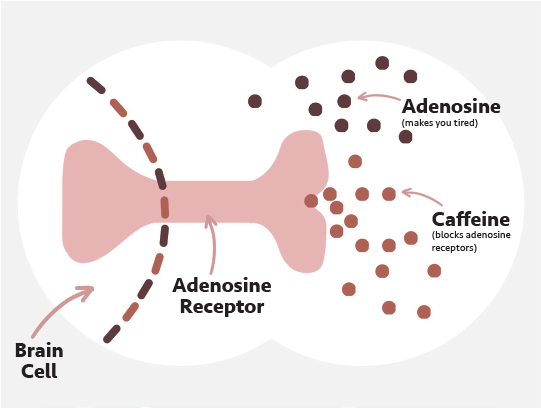
Source: ChemMatters
And as it turns out, caffeine molecules and adenosine molecules have a similar shape. When caffeine is in our system, it binds to the adenosine receptors, physically preventing adenosine from attaching. Caffeine doesn't add energy, it simply blocks your brain's signals of tiredness.
Why does caffeine withdrawal cause headaches?
In addition to stopping feelings of tiredness, caffeine also causes your blood vessels to narrow. A 2009 study found that a 250 mg dose of caffeine (roughly two cups of coffee) reduced blood flow in the brain by ~27%.
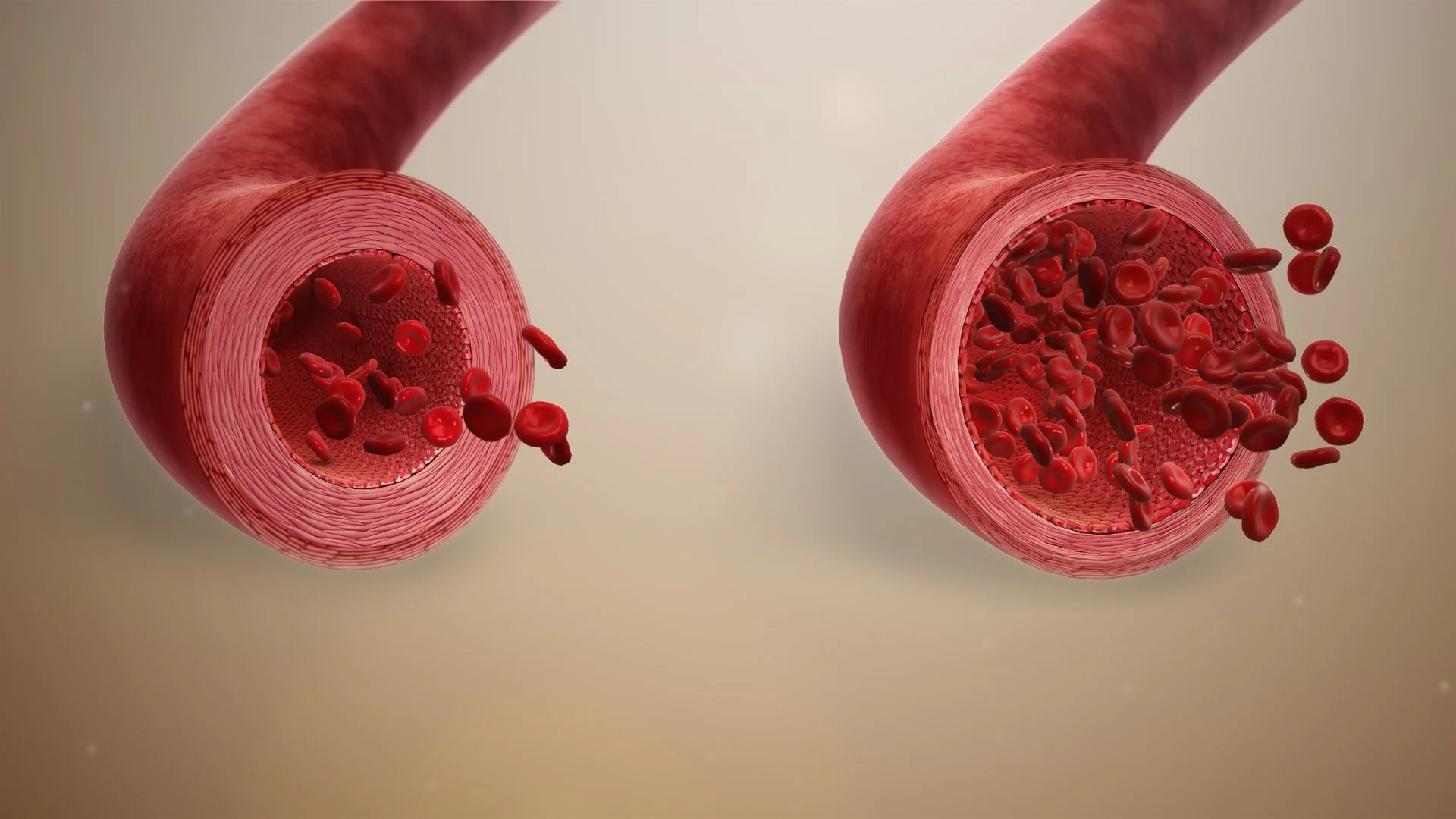
"Vasodilation" by www.scientificanimations.com is licensed under CC BY-SA 4.0.
If you take caffeine daily, your brain's blood vessels adapt to being partially constricted. So when you finally decide to cut out caffeine, your blood vessels will widen more than usual, putting pressure on the surrounding nerves. This effect sends pain signals to your brain, causing a caffeine withdrawal headache.
Depending on how much caffeine you usually have, these headaches can last up to a couple of weeks as your body adjusts to not having caffeine in its system. But you can lower your odds of getting caffeine withdrawal headaches by cutting your intake ~25% every week instead of going cold turkey. Swapping some of your cups for decaf is an easy way to do it.
🧠 Bonus brain points
If the brain has no pain receptors, how do headaches work?
While it's true that the brain itself has no pain receptors (this is why brain surgery can be done while you're awake), there's a lot around your brain that does have pain-sensing nerves.
Several tissues around your brain can get irritated: membranes covering your brain, blood vessels, and muscles in your head and neck. The nerves in these tissues can get triggered when there's inflammation, widening of the blood vessels, or even just tense muscles. So while your brain feels like it's hurting, it's technically the tissues around it that feel the pain.
Curious about how the world works?
Today You Should Know is a free, weekly email newsletter designed to help you learn something new every Friday.
Subscribe today 👇
Check out some other curious questions:

Sources
Addicott, M. A., Yang, L. L., Peiffer, A. M., Burnett, L. R., Burdette, J. H., Chen, M. Y., Hayasaka, S., Kraft, R. A., Maldjian, J. A., & Laurienti, P. J. (2009). The effect of daily caffeine use on cerebral blood flow: How much caffeine can we tolerate? Human Brain Mapping, 30(10), 3102–3114. https://doi.org/10.1002/hbm.20732
Giambrone, H. (2026, May 5). Caffeine Withdrawal Headache: How Long It Lasts and Why It Happens. Touchstone Recovery Center. https://touchstonerecoverycenter.com/caffeine-withdrawal-headache-guide/
Parry, W. (2024, February 1). Caffeine: The Good, the Bad, and the Why. ACS ChemMatters. https://www.acschemmatters-digital.org/acschemmatters/february_2024/MobilePagedArticle.action?articleId=1951439
Tornstrom, K. (2020, October 12). Does caffeine treat or trigger headaches?. Mayo Clinic Health System. https://www.mayoclinichealthsystem.org/hometown-health/speaking-of-health/does-caffeine-treat-or-trigger-headaches


We Americans sure do like American things.