
The short answer
We typically wear rings on the “ring finger” because the ancient Egyptians believed a special vein ran from the fourth finger on the left hand straight to the heart. The Romans later gave this idea a romantic name: the “vein of love.”
The long answer
Humans (and hobbits) love rings. We've been wearing them for thousands of years as fashion statements, symbols of power and social status, and of course as signals to let the world know you're married.
Historical accounts suggest that ancient Egyptians were the first to exchange rings as symbols of love and commitment. Made from reeds, leather, and ivory, the circular shape represented eternity, as the circle has no beginning and no end.
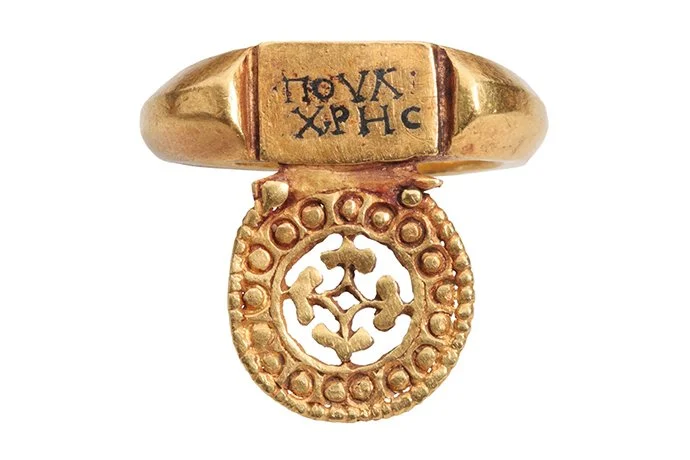
A gold ring from 4th century ancient Rome.
Source: Gemological Institute of America Inc. (Photo: Richard P. Goodbody Inc. (CC0 1.0))
The tradition spread over time, first to the Greeks following Alexander the Great's conquest of Egypt, and then onward to the Romans. In many cultures since, exchanging rings during a wedding ceremony has remained a tradition to this day.
But why have we decided that wedding rings should go on your "ring finger," the finger between your pinkie and middle finger? While we don't have definitive answers, here are two leading theories for why the "ring finger" is the ring finger.
Theory #1: The ring finger was believed to contain the "vein of love."
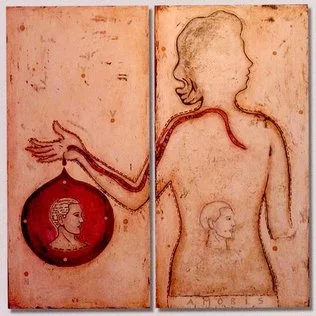
Contemporary painting illustrating the "vena amoris" by artist Mauricio Toussaint.
Ancient Egyptians believed that the fourth finger on the left hand contained a vein that led directly to the heart, later called the "vena amoris" (vein of love) by the Romans. Roman writer Macrobius documented the romantic practice of placing a ring on this finger as a nod to the vena amoris:
"Because of this nerve, the newly betrothed places the ring on this finger of his spouse as though it were a representation of the heart."
It's a romantic notion. But now we know that all veins return blood to the heart, so technically every vein is a vena amoris. ❤️
Theory #2: The ring finger was associated with healing and cleanliness.
Stemming from the belief that the ring finger housed the vena amoris, it became associated with various medical remedies in Medieval Europe. Some believed that simply wearing a gold ring on this finger could cure disease.
Others thought a pinch or a round of bloodletting could relieve ailments. For this reason, the ring finger was also known as the "leech finger." (By the way, "leech" was once an old word for doctor, which only later became the name for the bloodsucking worm.)
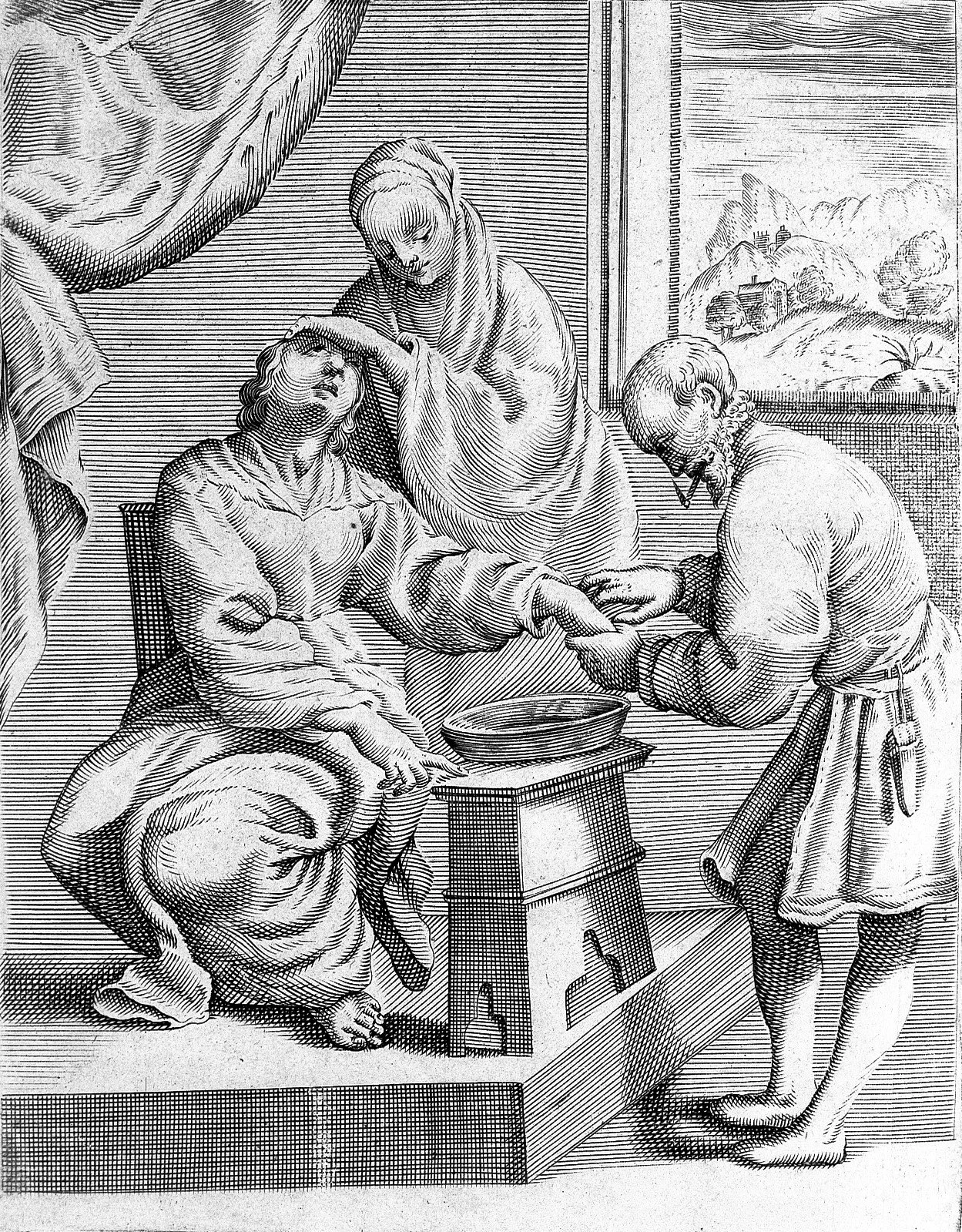
"Bloodletting from the hand Wellcome L0008233" by Tibero Malfi is licensed under CC BY 4.0.
Other cultures also associated the ring finger with health and cleanliness. The Japanese word for ring finger is kusuri yubi (薬指), which translates to medicine finger. The belief was that this was the cleanest finger, so it was used to take powder drugs.
🧠 Bonus brain points
Why are wedding rings typically worn on the left hand?
In many Western cultures, wedding rings are worn on the left ring finger. This tradition is partly rooted in the ancient Egyptian belief that a vein ran from the left ring finger directly to the heart. But it also has practical advantages: Since most people are right-handed, a ring worn on the left hand will experience less wear and tear from daily use.
But other cultures choose to wear wedding rings on the right hand. For example followers of the Eastern Orthodox Church (common in Russia, Greece, Ukraine, Serbia, Bulgaria, Romania, and Georgia), wear rings on the right hand because of the belief that Jesus sits at the right hand of God. And in Jewish wedding ceremonies, the ring is placed on the right hand of the bride because that hand is traditionally used for oaths—though many brides switch it to the left hand afterwards.
Curious about how the world works?
Today You Should Know is a free, weekly email newsletter designed to help you learn something new every Friday.
Subscribe today 👇
Check out some other curious questions:



Sources
The Cape Town Diamond Museum. (2025, May 15). The History of the Wedding Ring. The Cape Town Diamond Museum. https://www.capetowndiamondmuseum.org/education/the-history-of-the-wedding-ring
CrunchyNihongo. (n.d.). Japanese Vocabularies: Talking about human body. CrunchyNihongo. https://crunchynihongo.com/japanese-vocabularies-talking-about-human-body/
Dalton, O. M. (1912). Introduction. In Franks Bequest Catalogue of the Finger Rings Early Christian, Byzantine, Teutonic, Mediaeval and Later. introduction, Order Of the Trustees. https://dn790002.ca.archive.org/0/items/catalogueoffinge00brituoft/catalogueoffinge00brituoft.pdf
Gemological Institute of America Inc. (2020, May 8). The Origin of Wedding Rings: Ancient Tradition or Marketing Invention?. Gemological Institute of America Inc. https://4cs.gia.edu/en-us/blog/origin-of-wedding-rings/
Kunz, G. F. (2012). Rings for the Finger. J.B. Lippincott Company. (193-197) https://books.google.com/books?id=a4FCAQAAIAAJ&pg=PA194#v=onepage&q&f=true
Merriam-Webster. (n.d.). How the “Ring Finger” Got Its Name. Merriam-Webster. https://www.merriam-webster.com/wordplay/how-the-ring-finger-got-its-name
Vucelich, E. (2020, May 26). Why the Orthodox Wear Wedding Rings on the Right Hand. Orthodox Creations by Elaine. https://www.orthodoxcreationsbyelaine.com/orthodox-wedding-rings-right-hand/



We Americans sure do like American things.